
Tween-80 (Polysorbate 80)
Nonionic Surfactants
Tween-80
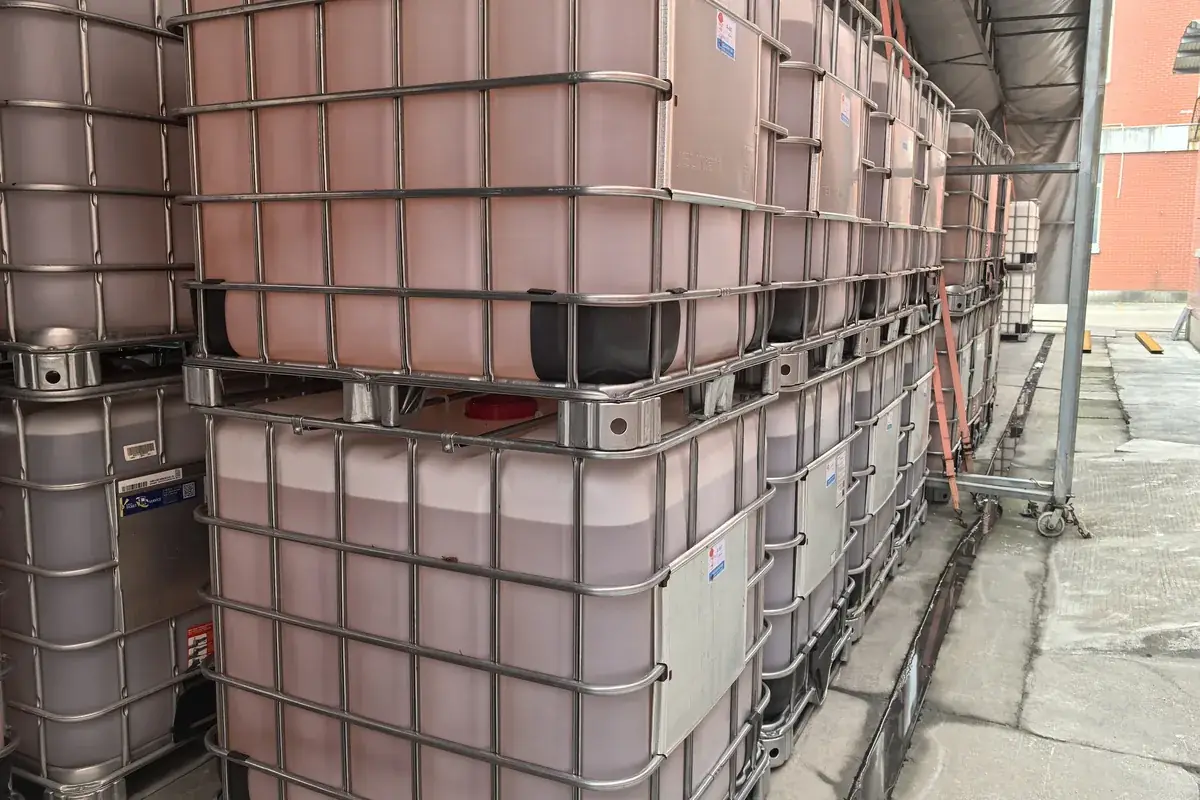
Surfactant and emulsifier are often treated as two rival families of product. They are not. Every emulsifier in commercial use is a surfactant, but not every surfactant is doing the work of an emulsifier. The difference is not in the molecule. It is in which interface the molecule is asked to hold, and how long it has to hold it. This note sets out the distinction in plain terms, shows exactly where the two terms overlap, and explains why it changes the way you shortlist a grade.
A surfactant is any molecule built from a water-loving (hydrophilic) head and an oil-loving (lipophilic) tail, which migrates to an interface and lowers the tension there. An emulsifier is a surfactant that has been selected, matched and dosed so that an oil-water mixture stays as small dispersed droplets long enough to be useful, through dilution, storage, temperature swings and the shear of a pump or a spray nozzle. In one line: surfactant is a chemistry class, emulsifier is a job description.
Because all surfactants share the same head-and-tail architecture, they sit somewhere on one short list of effects. What changes from grade to grade is which interface the molecule prefers, how fast it reaches it, and how dense a film it builds once it is there.
Emulsification is not a different chemistry; it is the same chemistry under three extra demands. First, the interface in question must be oil-water, not air-liquid or liquid-solid. Second, the emulsifier has to be present at a level that covers the new droplet surface area the process keeps creating, which is why dose in an emulsion is driven by oil load and shear rather than by a wetting target. Third, the film it forms has to survive service conditions: pH, electrolyte load, temperature cycling, freeze-thaw, dilution in the customer's water, and the weeks or months between filling and use. A surfactant that wets brilliantly can fail all three and never work as an emulsifier.
This is also why 'required HLB' belongs to emulsifier selection and not to surfactant selection in general. The oil phase in front of you has an HLB it needs; the emulsifier is screened against that number before any trial, then confirmed by test. HLB alone decides nothing, but it removes most of the wrong candidates cheaply.
| Question | Surfactant (the class) | Emulsifier (the job) |
|---|---|---|
| Working definition | A molecule with a hydrophilic head and a lipophilic tail that concentrates at an interface | A surfactant selected and dosed to keep an oil-water emulsion stable in service |
| Interface it acts on | Whatever interface exists: air-liquid, liquid-solid or liquid-liquid | Specifically the oil-water interface, plus the new droplet surface created by shear |
| What 'working' looks like | Lower surface or interfacial tension: faster wetting, better dispersion, controlled foam | No separation, creaming or coalescence across the required shelf life and service conditions |
| Role of HLB | A useful descriptor for nonionic grades, but not a requirement | A first-pass screen, matched to the required HLB of the oil phase before trials |
| Dose logic | Set by the effect wanted at the surface or on the particle | Set by droplet surface area: more oil phase or more shear means more emulsifier |
| Typical failure mode | Poor wetting, foam the process cannot tolerate, dispersion that settles out | Phase separation, creaming, flocculation, loss of clarity on dilution |
| Common chemistries | Ethoxylates, sorbitan esters, phosphate esters, sulfates, betaines | The same list, biased towards ethoxylated sorbitan esters, ethoxylated oils and phosphate esters |
The confusion around 'surfactant vs emulsifier' usually hides a second question. A dispersant keeps solid particles apart in a liquid. A solubiliser brings a hydrophobic material into a clear, thermodynamically stable solution. An emulsifier holds two liquid phases as droplets that remain visibly dispersed. They can be the same molecule at different doses, but they are judged by different tests: settling for a dispersant, clarity for a solubiliser, and stability against separation for an emulsifier.
Once you know the molecule has to work at an oil-water interface, the next question is which ionic family it belongs to, because that decides the water it can tolerate. Anionic surfactants carry a negative charge: strong wetting and dispersion at low dose, but they react with the calcium and magnesium in hard water and can precipitate or lose performance. Nonionic surfactants are uncharged and therefore indifferent to hardness and electrolyte load, which is why they form the backbone of most emulsion packages. Cationic grades are chosen where substantivity matters and are rarely the emulsifier of first resort; amphoteric grades change charge with pH and are mild rather than powerful. In practice most working packages blend a nonionic backbone with a small anionic portion, so the formulator can trade stability against wetting without changing the whole system.
For emulsions, the nonionic ethoxylated sorbitan Tween-80 (Polysorbate 80) is specified as CAS 9005-65-6 to HG/T 3510, with hydroxyl value 65-82 mgKOH/g and water content not more than 2%, and works as an oil-in-water emulsifier and solubiliser. Its oil-leaning partner Span-80 (Sorbitan Oleate) is CAS 1338-43-8 to HG/T 3508, hydroxyl value 190-220 mgKOH/g, and is the water-in-oil side of the same family. Where an HLB figure is published, it helps to compare directly, as with Emulsifier EL-40 (PEG-40 castor oil), CAS 61791-12-6, HLB 13-14 with a 1% cloud point of 70-84 °C. On the anionic side, MOA-3PK, CAS 58318-92-6, is a fatty alcohol ether phosphate ester supplied as the potassium salt with pH 6-8 at 2% and stated resistance to hard water, acid and alkali. For agrochemical concentrates, Pesticide Emulsifier 600, CAS 99734-09-5, is our emulsifier series for EC-type preparations.
One honest note on data: not every grade carries a published HLB, cloud point or emulsion-stability figure. Pesticide Emulsifier 600, for example, is published with its appearance only, because the full parameter set is still pending on the source documents. Where a number is not on the datasheet, treat it as unknown rather than interchangeable - and ask for it. Selecting an emulsifier on an assumed HLB is how formulations get approved on paper and fail in a drum.
See also our plain-language definition of an emulsifier, the head-group mechanics in emulsifier hydrophilic head, the ionic comparison in nonionic vs anionic surfactants, and the agrochemical selection walkthrough in how to choose an emulsifier for agrochemicals.
Readers reach this page from both directions. One search reads 'surfactant vs emulsifier'; the other reads 'emulsifier vs surfactant'. They are the same question, and they resolve to the same answer. An emulsifier is not a second family of chemistry standing beside surfactants. It is a surfactant that has been selected, matched and dosed for one particular job - holding an oil-water interface stable for as long as the product has to last. The word order changes only what the reader is weighing up, never the chemistry.
| What you type | What you are usually weighing up | The short answer |
|---|---|---|
| surfactant vs emulsifier | Whether these are two competing product families | No. One is the chemistry class; the other is a job inside that class. |
| emulsifier vs surfactant | Whether an emulsifier is a special kind of surfactant | Yes. Every emulsifier in commercial use is a surfactant; what is added is the oil-water interface and the service life it has to survive. |
| emulsifier vs solubiliser | Which of the two jobs the grade is actually doing | Different interfaces and different acceptance tests - clarity of solution against stability against separation. The three-jobs section above covers the split. |
| emulsifier vs dispersant | Whether the target is liquid droplets or solid particles | An emulsifier holds two liquids; a dispersant keeps solids apart. The same molecule can do both at different doses. |
The word order is not a tell, and neither is the trade name on the drum. A buyer who types the words the other way round is asking exactly the same thing, and a supplier who answers only the version printed on the datasheet has answered half the question.
The confusion is structural rather than sloppy. The product vocabulary grew out of catalogue categories: a buyer asked a supplier for an emulsifier the way they asked for a wetter or a dispersant, and the supplier answered with a shelf position. The chemistry vocabulary grew from the other direction, from the molecule and its head-and-tail architecture. Neither vocabulary is going to retire, so the same physical product can be described correctly by both words - and an enquiry written in only one of them will be read correctly by some suppliers and misread by others.
This is also why reversing the two words does not signal a different question. The two vocabularies overlap in exactly one direction, the chemistry class containing the job, and a search in either order lands inside that overlap. The only case where the wording genuinely changes the answer is when the second term names a different job, which is what the last two rows of the table above cover.
Because the relationship is a subset, the two words are never a choice between products. The practical question is which of the grades in front of you is doing which job, and that is decided by the demands the process places on it. The five items below are the test to apply to a shortlist from two suppliers, in order.
Applying the test often breaks a tie the labels had hidden. Two suppliers can quote the same chemistry under different function words, and the one that used the word 'emulsifier' is not automatically the one that will hold your emulsion. Conversly, a grade sold as a general-purpose surfactant is the correct emulsifier if it clears all five items - which is why buying by function has to mean specifying by function, not reading a function word off a datasheet.
Once the distinction is treated as a job description rather than a product category, the shortlisting route simplifies. Every step below is set by the application, and none of it changes with the vocabulary a supplier happens to use.
| Step | What you fix here | Why the label cannot do it for you |
|---|---|---|
| 1 | The oil phase and its required HLB | 'Emulsifier' says nothing about the oil you actually have in the tank. |
| 2 | The ionic family, against the rest of the formula | Compatibility is set by charge and head group, not by a function word. |
| 3 | The dose, from droplet surface area and process shear | A wetting dose and an emulsifying dose are different numbers for the same drum. |
| 4 | The acceptance test, before the first trial | 'Works' has to mean no separation over the shelf life and through dilution, not a clean sample on the bench. |
| 5 | The written specification: identity, range and standard | The trade word is the least transferable part of any quotation. |
Two of those steps carry most of the weight. Step 2 decides between otherwise comparable grades, because the ionic family sets what the water will tolerate before any trial is run. Step 4 is the one most often skipped, and it is the reason a formulation can pass its bench trial and separate in the drum three weeks later. Neither step is a judgement call about terminology; both are inputs the application supplies.
Two vocabularies run in parallel through an enquiry. The formulator's words describe the job - emulsifier, wetter, solubiliser, dispersant. The document's words describe the molecule - chemical or INCI name, CAS number, ionic class, standard. An enquiry written only in the first vocabulary leaves the supplier free to choose the chemistry. An enquiry written only in the second leaves both sides guessing about the application. The workable enquiry carries both, in the same paragraph.
A published trade label is a starting point, not the answer. A nonionic grade such as Lipalbin, a versatile nonionic emulsifier published at HLB 11-12, tells you the family and a screening value; it still has to be matched against your oil phase and against the ionic family of the rest of the formula. Where a grade carries a published HLB, that figure belongs in the enquiry alongside the chemistry, not instead of it.
The distinction is simple, and that is exactly why it is easy to skip past. Four traps show up again and again in the enquiries we see.
None of these traps needs new vocabulary to avoid. They need the specification to be written in the same language the acceptance test will use.
For the chemistry underneath the ethoxylated grades, what polyethylene glycol is explains the polyoxyethylene chain that most nonionic emulsifiers are built from. The Span and Tween pair is the clearest single example of one backbone covering both sides of the balance. On the application side, wetting, levelling and scouring in textile dyeing shows the same molecules judged by different tests, and coconut diethanolamide (6501) covers a nonionic that is bought for foam and viscosity rather than for an oil-water interface.
If the open question is which grade to test first rather than which word to use, the selection walkthroughs elsewhere on this site take the same three inputs - oil phase, ionic family and water quality - and turn them into a shortlist.
Tell us the oil phase, the ionic family of the rest of the formula and the water quality you expect, and we will shortlist grades and propose a test plan. Send us the details.
Nonionic Surfactants
Tween-80
Nonionic Surfactants
Span-80
Nonionic Surfactants
emulsifier EL-40 PEG-40 castor oil
Anionic Surfactants
MOA-3PK fatty alcohol ether phosphate ester
Yes. An emulsifier is a surfactant that has been selected and dosed to hold an oil-water emulsion stable. Every emulsifier is a surfactant; not every surfactant is used as an emulsifier.
Not reliably. Emulsification adds three demands on top of surface activity: the interface must be oil-water, the dose must cover the droplet surface area the process creates, and the film must survive pH, electrolyte, temperature and storage. A good wetter can fail all three.
A solubiliser brings a hydrophobic material into a clear, thermodynamically stable solution; an emulsifier holds two liquid phases as visibly dispersed droplets. The same molecule can do both at different doses, but they are judged by different tests - clarity for one, stability against separation for the other.
No. HLB is a screening tool: it is matched to the required HLB of the oil phase, then confirmed by dilution and storage tests. A grade with the 'right' HLB can still separate if the dose, ionic type or film strength is wrong.
Because it moves the specification from a name to a job. Buying by function lets you ask for the identity tests and the working window that prove the emulsion holds, rather than assuming any surface-active product will do.
Yes. The word order changes nothing about the chemistry. Every emulsifier in commercial use is a surfactant; what makes it an emulsifier is the job it is selected and dosed to do - holding an oil-water interface stable through dilution, storage and service conditions. The two phrasings are simply asked by readers approaching from different directions, one from the chemistry class and one from the application, and both resolve to the same subset relationship.
Ask five questions. Does the job involve an oil-water interface? Is the dose set by droplet surface area rather than by an effect at a surface? Is the acceptance criterion stability against separation rather than faster wetting? Is there a required HLB to match? Do the brief and the storage conditions name the oil phase and the water quality? A grade that clears those items is being used as an emulsifier, whatever it is called on the datasheet. A grade that clears none of them is a surfactant doing another job.
Ask for the function and give the chemistry. State the job - an oil-in-water emulsifier for a mineral-oil phase - and then state the identity: chemical or INCI name, CAS number where the grade has one, ionic class, the range it is supplied in and the standard it is made to. That combination lets two suppliers quote comparable products. Function words on their own do not, because they describe the job rather than the material.
No. The label describes where the grade is normally used, not what it will do in your system. A grade published with an HLB of 11-12 or 13-14 still has to be matched to the required HLB of your oil phase, checked against the ionic family of the rest of the formula, and confirmed by test at your use level. Where a datasheet carries no HLB, cloud point or emulsion-stability figure, treat the value as unknown and ask for it rather than assuming one.
Share your application, target market and required volume — our team responds with selection and lead time.
Contact us