
Span-80 (Sorbitan Oleate)
Nonionic Surfactants
Span-80
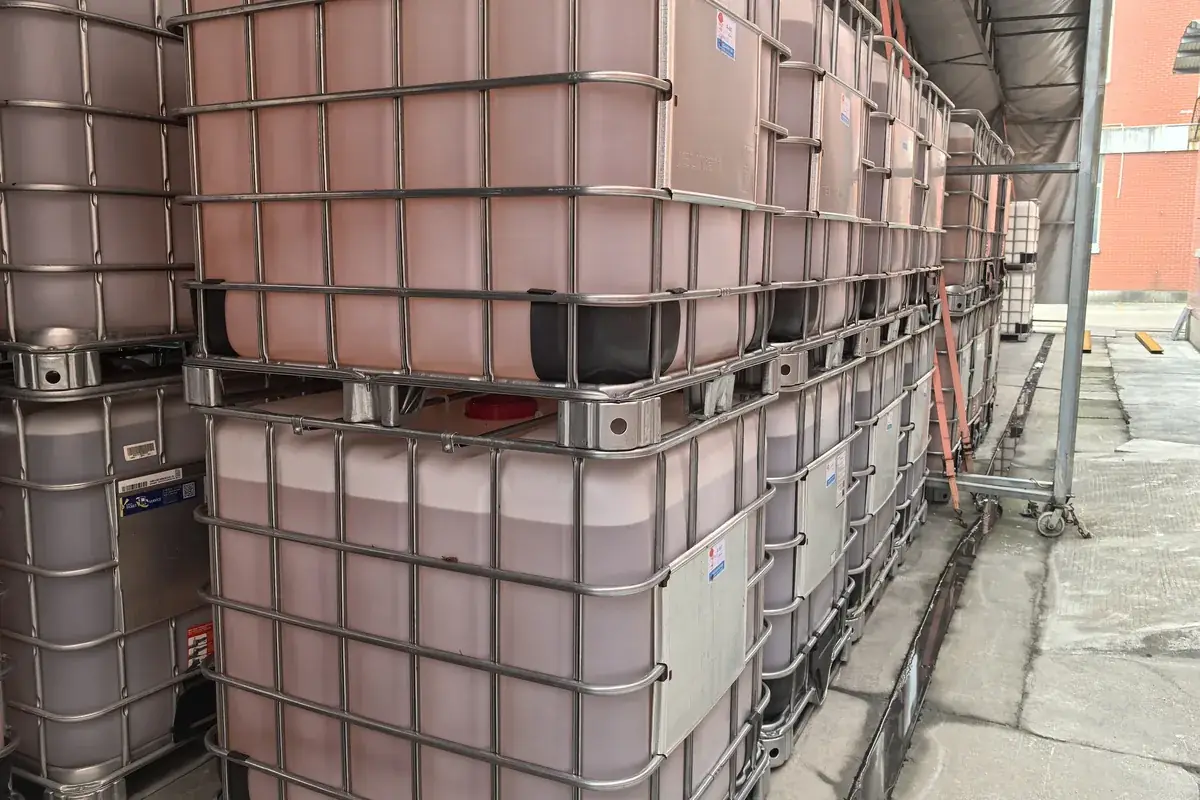
Surfactant choice usually comes down to two families: nonionic and anionic. Both lower surface tension, but they behave very differently in hard water, at extreme pH and in mixed tank systems. This note sets out how to pick between them, when to blend, and how to narrow the lens further to a nonionic emulsifier once the family is decided.
Nonionic surfactants carry no charge, which makes them largely indifferent to water hardness and electrolytes. Sorbitan esters such as Span grades and their ethoxylated polysorbates (Tween grades) tolerate a wide pH range and stay stable in salt-laden systems. Ethoxylated fatty alcohols add flexibility in foaming and wetting. For tanks with high electrolyte loads or uncertain pH, nonionics are the safer backbone.
Representative grades are Span-80 (Sorbitan Oleate) and Tween-80 (Polysorbate 80); for ethoxylated alcohol behaviour, see MOA-3PK.
Anionic surfactants carry a negative charge and tend to give stronger wetting, spreading and dispersion at low dose. Phosphate esters in particular wet fast and tolerate moderate hardness, while sulfates are aggressive cleansers. Their weakness is sensitivity: calcium and magnesium in hard water, and high electrolyte, can precipitate or reduce performance. They also dislike strongly acidic conditions where the head group can protonate.
Phosphate-ester options such as Isooctyl Phosphate Ester are common where wetting must be fast and hard-water tolerance matters.
Nonionics and anionics can be blended, but the mix is not automatic. Watch ionic strength and pH, and confirm the blend stays clear and stable in the actual tank water before scaling. A common pattern is a nonionic backbone for stability plus a small anionic portion for wetting. Keep the blend short and documented so performance stays repeatable across batches.
The rest of this note compares two families. This section narrows the lens to one sub-class inside the nonionic family, because that is where most emulsion packages are actually built. Nonionic describes the charge state: no net charge on the head. Emulsifier describes the duty: the molecule is being asked to hold an oil-water interface stable in service. Together they describe a molecule that carries no charge and holds an emulsion - which is why it survives conditions that would defeat a charged surfactant.
For an ethoxylated nonionic, the number of ethylene oxide units is the main design knob. Everything else follows from it.
The published values show the dial working across three different backbones. The ethoxylated castor oil Emulsifier EL-40 (PEG-40 Castor Oil, CAS 61791-12-6) carries HLB 13-14 and a 1% cloud point of 70-84 degC; the polyoxyethylene stearate Emulsifier SG-10 (CAS 9004-99-3) sits at HLB 12-13; and the fatty alcohol ethoxylate AEO-9 (CAS 68439-50-9) is published at HLB 13-14 with a 1% cloud point of 70-95 degC. The backbone sets solubility and handling; the ethoxylation sets the balance.
The sorbitan pair illustrates it. Span-80 (Sorbitan Oleate, CAS 1338-43-8, conforms to HG/T 3508) is published as a lipophilic water-in-oil emulsifier - the small sorbitol head leaves the molecule oil-leaning. Ethoxylate the same backbone and you get Tween-80 (Polysorbate 80, CAS 9005-65-6, conforms to HG/T 3510), published as an oil-in-water emulsifier and solubiliser. Same hydrophobic skeleton, opposite end of the balance. Note that the balance value itself is not part of the published specification for these two grades, so it is requested rather than quoted . The balance is a dial, not a property of the raw material.
There is also a temperature subtlety: for ethoxylated grades the balance itself drifts with temperature, so a system that is comfortably oil-in-water at 25 degC can turn towards water-in-oil when heated. Where a process runs hot, the datasheet value is a starting point and the temperature behaviour is what to test.
| Target | What you are looking for in the nonionic | Published examples in this range |
|---|---|---|
| Oil-in-water emulsion | A water-loving-balance grade with a cloud point above the service temperature | Emulsifier EL-40 (HLB 13-14) , Emulsifier SG-10 (HLB 12-13) , AEO-9 (HLB 13-14) |
| Water-in-oil emulsion | A low-balance, oil-leaning nonionic with a small polar head | Span-80, published as a lipophilic water-in-oil emulsifier |
| Stability plus solubilisation | A grade that also brings a hydrophobic material into solution | Tween-80, published as an oil-in-water emulsifier and solubiliser |
| Mid-range balance, multiple formats | A mid-range grade spanning personal-care and coating emulsions | Lipalbin, a nonionic emulsifier at HLB 11-12 and purity >=99% |
Most working emulsions use more than one nonionic, because a single grade rarely delivers both a dense interfacial film and good spreading. The usual pattern pairs a higher-balance grade with a lower-balance one, then adds a small portion from another family only where extra wetting is needed. That addition is a trade: it buys wetting power and gives up some of the hard-water indifference that made the nonionic backbone attractive.
The two families are not rivals inside a working formulation; they are two halves of one package. The charged surfactant does the fast work - it wets, spreads and disperses at low dose. The uncharged one does the patient work - it builds the interfacial film and keeps the system behaving when the water, the pH or the salt content stops being ideal. Most industrial cleaning, textile and emulsion systems end up using both, and the formulator's job becomes deciding the ratio rather than picking a side.
Adding an ionic surfactant to a nonionic one changes how the mixture behaves at the interface, and the outcome depends on which charge is added.
The clearest published example on this site is the alkanolamide CMEA (coconut monoethanolamide, CAS 68140-00-1). It is a nonionic surfactant published as a thickener, foam booster and foam stabiliser, and the published note records that it works with anionic surfactants such as SLS and SLES for synergistic foam and viscosity. That is the classic nonionic job in a wash system: it does not replace the anionic, it makes the anionic work better.
The other half of the same package is normally an ethoxylated alcohol. AEO-9 (C12-14 alcohol ethoxylate, CAS 68439-50-9) is published as a nonionic with an HLB of 13-14, a 1% cloud point of 70-95 degC and hard-water resistance, which is what a wash liquor needs when the water is not soft and the pH is not gentle.
The usual shorthand is that nonionics tolerate salt and hard water while anionics do not. The shorthand is useful but it is not a rule, and treating it as one costs formulators good grades. What decides the outcome is the head group, not the label.
A phosphate-ester anionic can behave far better in a hostile bath than a sulfate one. MOA-3PK (fatty alcohol polyoxyethylene ether phosphate ester, potassium salt, CAS 58318-92-6) is published as an anionic with excellent water solubility, excellent electrolyte compatibility, and resistance to acid, alkali and hard water. At the other end, Alkali-resistant Penetrant AEP (isooctanol polyoxyethylene phosphate acid ester, CAS 68439-39-4) is published at pH below 3 and solid content of at least 98% to standard Q/320621HA070, for strongly alkaline baths where an ordinary penetrant breaks down.
So the screening question is not ionic or nonionic. It is which head group, in which bath, doing which of the two jobs - wetting the surface, or holding the system together.
| AEO-9 (C12-14 alcohol ethoxylate) | nonionic, ethoxylated alcohol | CAS 68439-50-9; HLB 13-14; 1% cloud point 70-95 degC | wetting plus hard-water tolerance in a wash system |
| Tween-80 (polysorbate 80) | nonionic, sorbitan ester ethoxylate | CAS 9005-65-6; standard HG/T 3510 | oil-in-water emulsification and solubilising |
| Span-80 (sorbitan oleate) | nonionic, sorbitan ester | CAS 1338-43-8; standard HG/T 3508 | the lipophilic partner when a Tween is used in a pair |
| CMEA (coconut monoethanolamide) | nonionic, alkanolamide | CAS 68140-00-1 | foam and viscosity boosting alongside an anionic |
| MOA-3PK (fatty alcohol phosphate ester) | anionic, phosphate ester | CAS 58318-92-6 | electrolyte and hard-water tolerance from an anionic |
| AEP (isooctanol polyoxyethylene phosphate ester) | anionic, phosphate ester | CAS 68439-39-4; standard Q/320621HA070 | penetration in strongly alkaline baths |
One reading note on that table. The charge column states the chemistry; the published marker column is what a buyer can carry onto a specification sheet. Where a grade is published with a standard number, that number identifies the document to ask for with the lot.
The grades are documented individually on this site: Tween-80 (polysorbate 80) and Span-80 (sorbitan oleate) as the sorbitan pair, and CDEA 6501 alongside CMEA in the alkanolamide family. For the head-group chemistry behind the charge difference, see what an emulsifier is and how the ionic types compare.
Three decisions remain once the pairing is chosen, and none of them can be settled on paper.
If you want the pairing screened against your own oil phase, bath chemistry and temperature, send us the details and we will shortlist the two grades and a starting ratio.
An anionic emulsifying agent is an emulsifier whose water-loving head carries a negative charge. That charge is the reason to choose one: it wets, spreads and disperses faster at a lower dose than an uncharged grade of the same load. It is also the reason anionic grades have limits, because anything positively charged or high in calcium and magnesium competes with the head group for the same interface.
The four head groups that carry the charge are carboxylate soaps, sulfates, sulfonates and phosphate esters. Almost every question about an anionic emulsifier - will it work in hard water, which pH window, will it foam, can it sit next to a cationic additive - is answered by knowing which of the four you are holding.
Every emulsifier is a head-and-tail molecule. The tail is the oil-loving part and is built from much the same hydrocarbon chemistry across the families; what changes is the head, and with it the charge. An anionic head acquires its negative charge from an acid group that gives up a proton in water, leaving a negative site. A counter-ion - sodium, potassium, ammonium or an amine - travels with it and keeps the molecule neutral overall.
That is the practical difference from the other two classes. A nonionic head carries no charge at all, which is why it tolerates hardness, salt and pH swings. A cationic head carries a positive charge, which is why it is chosen for substantivity - softening and antistatic work - and why it is the one class that must be kept away from an anionics.
| Head group | Where the charge comes from | Behaviour it buys | Where it is usually chosen | Where it struggles |
|---|---|---|---|---|
| Carboxylate (soap) | A fatty acid neutralised with an alkali or an amine | Economical, strong wetting and emulsifying; foam depends on the counter-ion | Metal cleaning, dry-cleaning soaps, textile scouring | Precipitates with calcium and magnesium; loses its charge as the pH falls |
| Sulfate | A fatty alcohol or ethoxylated alcohol esterified with sulfuric acid, then neutralised | Strong detergency, high foam, fast wetting | Liquid detergents, personal care, emulsion polymerisation | Can hydrolyse at low pH; sensitive to hard water |
| Sulfonate | A sulfonic acid group carried on an aromatic or paraffinic backbone | Stable across a wide pH range; tolerant of hardness and electrolyte | Industrial detergents, wetting agents, emulsifiers for solvent-rich systems | Higher cost per unit of active material |
| Phosphate ester | A phosphate group attached to an alcohol or an ethoxylate | Fast wetting, hardness tolerance, low foam; also antistatic and corrosion-inhibiting in service | Agrochemical emulsifiable concentrates, metalworking fluids, textile auxiliaries | An acidic raw material; over-neutralising it changes the behaviour |
Three places on a data sheet tell you which of the four you are buying, and they do not always agree with each other.
Three published examples from this range make the reading concrete. AESA (ammonium laureth sulfate, CAS 32612-48-9) is a sulfate, published with active matter of 70 +/- 2% and a pH of 5.5-7 - a high-activity grade built for foam and detergency. TEAO (triethanolamine oleate, CAS 10277-04-0) is a carboxylate soap, an amine salt of a fatty acid, which is why it appears in metal cleaning and rust-preventive work rather than in a hard-water system. MOA-3PK (fatty alcohol phosphate ester, CAS 58318-92-6) is the phosphate sub-class, published with a pH of 6-8 at 2% and with resistance to acid, alkali and hard water recorded as its selling points.
Two places this range is documented for that duty: how to select an emulsifier for agrochemical formulations works through the tank-side decisions, with Pesticide Emulsifier 600 as the solvent-system starting point, and surfactants in textile dyeing auxiliaries covers the scouring and levelling side.
The order that saves the most bench time is water first, then pH, then duty, then foam. Water decides whether a carboxylate is even possible. The pH window decides between carboxylate, sulfate and the two acid-stable groups. The duty decides how much charge and how much tail you actually need. Foam tolerance decides the final pick among the grades that survived.
A short worked route: a scouring bath in soft water at alkaline pH is carboxylate territory. The same bath in hard water moves to a sulfonate or a phosphate ester. A spray system that cannot tolerate foam moves to a low-foam phosphate ester even though a sulfate would wet faster. A tank that already contains a cationic softener should not carry an anionic at all - the nonionic sections above are the way out.
Anionic character alone does not make a molecule an emulsifier. APAM (anionic polyacrylamide, CAS 9003-05-8) is published on this site as a flocculant, and its own product record notes that it is not a surfactant - the charge is on a polymer backbone doing a completely different job. Reading the class off the charge, rather than off the duty, is the most common way to shortlist the wrong product.
Inside a working formulation the two families divide the work rather than compete for it: the anionic portion supplies speed, the nonionic portion supplies tolerance. The pairing rules, the order of addition and the screening tests are set out in the comparison sections above, and the definitional background on the three classes sits in what an emulsifier is, ion by ion.
The sections above set out how to brief a supplier on an anionic grade, where the charge on the head group drives the questions. A nonionic enquiry turns on different fields. With no charge on the head, ionic strength stops being the deciding question; what decides performance is the backbone, the degree of ethoxylation, and where the product clouds out in the water you will actually run.
That shift matters whenever a buyer moves from a specification that works to a second source, or rebuilds a formulation for harder water or a hotter line. The grade name alone will not carry the answer, because it names a family and often an ethoxylation step, and stops there.
Those six, written down, are the difference between a quote and a specification. Leave any of them out and the supplier is filling the gap with an assumption rather than with your process.
A nonionic grade name is a shorthand. It says which family the product belongs to and, for an ethoxylated grade, roughly how far the chain was extended. It does not state the cloud point, the active content or the standard. Two quotes for the same name can differ on all three, and the difference is not visible until the product is in the base, where it shows up as a change in solubility, in foam or in stability.
An equivalence question of exactly this kind is worked through in Tween-80 equivalents and specification, and the co-surfactant half of a detergent base is set out in coconut diethanolamide (6501 / CDEA). Both apply the same rule: agree the figures first, then compare the price.
Sourcing from a China-based supplier does not change the chemistry or the selection logic above; it changes the paperwork. The technical comparison is the same wherever the supplier sits, so the fields in the enquiry above stay exactly as they are. What has to be added is the paper trail, because a grade name travelling across a language and a market is easier to lose than one bought locally.
None of that is exotic; it is the ordinary documentation set for a chemical purchase. The reason to write it into the first enquiry is that the alternative - reconstructing it after the goods are booked - costs more time than the five lines it takes to ask.
For the vocabulary behind the two families, see surfactant vs emulsifier. Two grades that carry the enquiry points above in this range are X-305, a nonionic wetting agent for emulsion polymerisation, and Emulsifier SG-10, an ethoxylate chosen for emulsifier duty.
For the chemistry underneath the dial, see what an emulsifier is and how the ionic types compare and how the hydrophilic head group sets the balance. For an applied case, see choosing an emulsifier for agrochemical formulations.
Start from water quality and the property you most need - stability or wetting. Compare Span-80 and Tween-80 on the nonionic side against Isooctyl Phosphate Ester on the anionic side to set a first blend ratio.
Nonionic Surfactants
Span-80
Nonionic Surfactants
Tween-80
Textile Auxiliaries
isooctyl phosphate ester
Anionic Surfactants
MOA-3PK fatty alcohol ether phosphate ester
Nonionic Surfactants
emulsifier EL-40 PEG-40 castor oil
Emulsifiers
emulsifier SG-10 polyoxyethylene stearate
Nonionic Surfactants
AEO-9 fatty alcohol ethoxylate
Pick nonionic when water is hard, the system is salty, or pH will swing - stability is the priority. Pick anionic when you need maximum wetting and dispersion at low dose in soft to moderate water. Blend the two when one family cannot cover both.
Yes, but the mix is not automatic. Watch ionic strength and pH, and confirm the blend stays clear and stable in the actual tank water before scaling - a nonionic backbone plus a small anionic portion for wetting is a common pattern.
It is a surfactant with no net charge on its head that has been selected and dosed to hold an oil-water interface stable. Nonionic describes the charge state; emulsifier describes the duty. Because the head is uncharged it tolerates hard water, electrolytes and a wide pH range, which is why nonionics form the backbone of most emulsion packages.
Same chemistry class, different duty. A nonionic surfactant may be sold for wetting, foaming or detergency. A nonionic emulsifier has to meet three extra demands: the interface must be oil-water, the dose must cover the new droplet surface area created by shear, and the resulting film must survive pH, electrolyte, temperature cycling and storage.
The balance between head and tail - for ethoxylated grades, the number of ethoxy units. More ethoxy units makes the molecule more water-loving and favours oil-in-water; fewer units leaves it oil-leaning and favours water-in-oil. Span-80 is published as a lipophilic water-in-oil emulsifier, and its ethoxylated counterpart Tween-80 as an oil-in-water emulsifier and solubiliser.
Yes, and it is the most common pairing in industrial practice. The anionic supplies wetting speed and detergency at low dose while the nonionic supplies tolerance and film strength, so detergent, textile scouring and agrochemical systems are normally built on both. The work is in fixing the ratio and the order of addition, not in choosing a side.
Cationic with anionic is the pairing to avoid. The opposite charges neutralise each other and the pair can drop out of solution as an insoluble complex, which shows up as haze, sediment or a sudden loss of both functions. Nonionic grades are the ones that can sit alongside either charge, and amphoterics are relatively tolerant, which is why they are used where mildness matters.
They generally do, because there is no charge on the head for dissolved salts to screen - and that is the main reason nonionics are chosen for hard water and high-electrolyte baths. The exception is temperature rather than salt: an ethoxylated nonionic loses solubility as the bath gets hot, so check its cloud point against your process temperature. It is also worth remembering that some anionic head groups tolerate electrolyte well, so the chemistry of the head group decides the outcome.
It is an emulsifier whose water-loving head carries a negative charge, usually from a carboxylate, sulfate, sulfonate or phosphate group. The charge buys fast wetting, spreading and dispersion at a low dose; it also makes the grade sensitive to hard water, low pH and any positively charged additive in the same tank.
Read the name first: laureth sulfate is a sulfate, an oleate is a carboxylate soap, and a phosphate ester belongs to the phosphate sub-class. Then confirm with the figures - active matter, pH of a working dilution, acid value and the counter-ion. Where a catalogue groups a grade under a family label that does not match the chemistry in its name, the chemistry is the safer guide.
It depends entirely on the sub-class. Carboxylate soaps are the most sensitive and can precipitate as scum, and sulfates lose performance early. Sulfonates and phosphate esters are far more tolerant of calcium and magnesium, which is why they are the usual choice where the water supply is uncertain.
The two charges neutralise each other. A positively charged softener, antistatic agent or conditioner binds directly to the anionic head group, and the complex can drop out of solution and take the emulsifier with it. The usual fixes are to separate the two in the process, or to bridge them with a nonionic that carries no charge.
Six things: the backbone family, the degree of ethoxylation or the resulting HLB, the cloud point at your process concentration, the physical form and active content, the standard the grade is made to, and the job and medium including water hardness and pH. With those written down, two replies can be compared directly; without them, the supplier is guessing at your process.
Because a grade name stops at the family and, for an ethoxylated grade, the ethoxylation step. It does not state the cloud point, the active content or the standard. Two suppliers can both quote the same name and differ on all three, and the difference only shows up in the base as a change in solubility, foam or stability.
No. The selection fields are the same wherever the supplier sits, because they follow from the chemistry and from your process water. What changes is the documentation: the standard, the lot certificate, the safety data sheet, the packing and the destination market have to be agreed up front, so the paper trail travels with the grade rather than being reconstructed after the order.
Share your application, target market and required volume — our team responds with selection and lead time.
Contact us