
NTJN Chemical · Product category

Textile Auxiliaries

Penetrants, levelling agents and pretreatment auxiliaries for textiles.

6Product grades
2020Established
Textile Auxiliaries product line
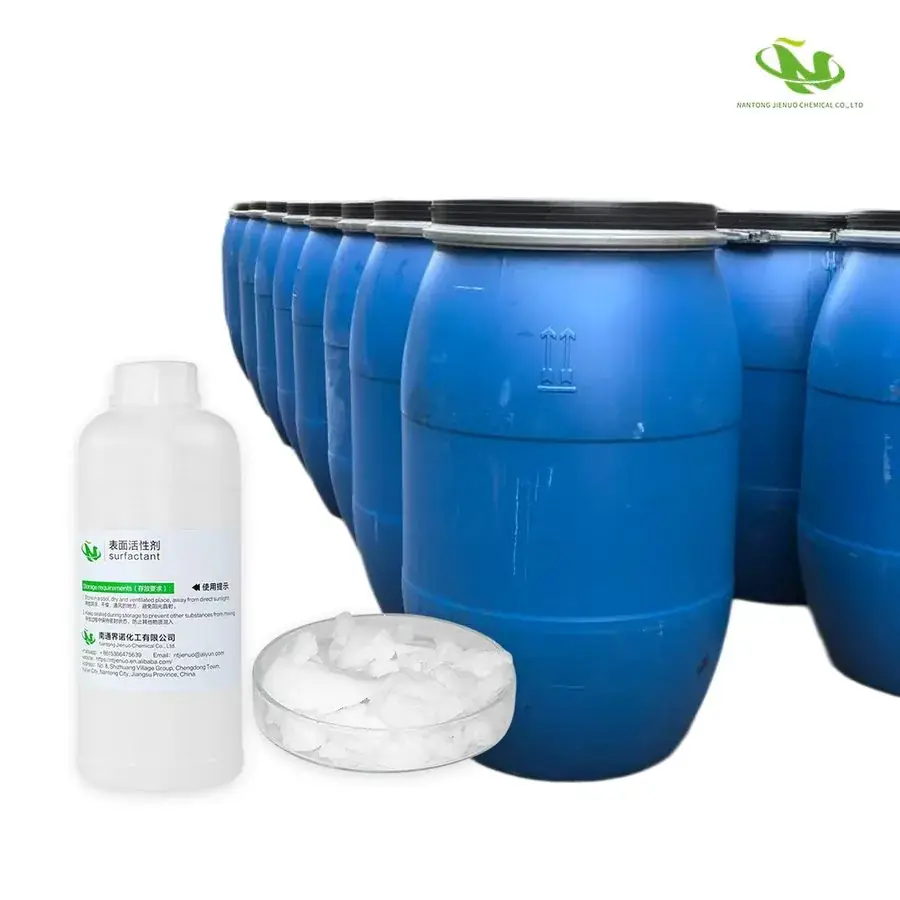
Textile Auxiliaries products & packaging

What are textile auxiliaries?

Textile auxiliaries are process chemicals that make textile pretreatment, dyeing and finishing reliable and repeatable — wetting, penetrating, dispersing, levelling and scouring at each stage. For mill buyers the practical question is not just what textile auxiliaries mean, but which product fits their fibre, machine and bath conditions.

The right auxiliary reduces defects, shortens process time and improves shade consistency. We help buyers compare textile auxiliaries and options against their process chemistry before sampling.

Common types of textile auxiliaries

Textile auxiliaries are grouped by the process stage they support. The main types we supply are:

  • Penetrants — such as Alkali-resistant Penetrant AEP, a penetrating agent for alkaline scouring and pretreatment baths.
  • Levelling agents — such as Levelling Agent O-25 (Peregal O-25), which evens dye uptake during dyeing.
  • Emulsifying and dispersing auxiliaries — such as isooctyl phosphate ester (HA-08), which emulsifies, wets and disperses in high-temperature alkaline systems.
  • Antistatic agents — such as Antistatic Agent SN (stearyldimethylbenzylammonium chloride) for PVC, PP, PE and textile antistatic finishing.
  • Penetrants for high-temperature dyeing — such as Nonionic Penetrant OE-35 (isooctanol polyoxyethylene ether) for premium dyeing baths.
  • Wetting agents and scouring aids — supporting preparation of greige fabric before dyeing and finishing.

Where textile auxiliaries are used

Textile auxiliaries support mills and chemical formulators in Southeast Asia, Europe, North America, India and the Middle East.

  • Pretreatment — scouring, desizing and bleaching with alkali-resistant penetrants. See textile printing & dyeing.
  • Dyeing — levelling agents control shade uniformity and dye exhaustion. See textile printing & dyeing.
  • Printing and finishing — auxiliary systems improve wetting, penetration and after-treatment consistency. See textile printing & dyeing.
  • Alkaline and high-temperature baths — phosphate ester chemistry maintains emulsifying and dispersing performance in demanding process conditions.

Process requirements differ by fabric: polyester dyeing needs precise levelling control to avoid streaks, while denim pretreatment demands strong wetting and penetration in concentrated alkaline baths. Tell us your fibre type, machine and liquor ratio, and we will match the penetrant or levelling agent to that specific process stage before sampling. This stage-by-stage fit is what keeps shade repeatability high and reprocessing low.

Related products

The textile auxiliary range covers the pretreatment, dyeing and antistatic chemistries mills ask for most:

Alkali-resistant Penetrant AEP — representative imagery

Alkali-resistant Penetrant AEP

Alkali-resistant Penetrant AEP is an anionic isooctanol polyoxyethylene phosphate acid ester (solid content >=98%, pH <3), supplied as a colorless-to-yellowish liquid. It delivers rapid, stable penetration in strongly alkaline baths and scouring liquors where ordinary penetrants break down, and conforms to Q/320621HA070. It is primarily used in textile pretreatment, alkali-bath penetration and scouring.

alkali resistant penetrant AEP

Isooctyl Phosphate Ester (HA-08) — representative imagery

Isooctyl Phosphate Ester (HA-08)

Isooctyl Phosphate Ester (HA-08) is an anionic phosphate-ester surfactant for textile pretreatment. It provides emulsifying, wetting and dispersing performance in high-temperature alkaline systems and helps penetrate and uniformise scouring and dyeing liquors. Full specification values are confirmed by the client before publication.

isooctyl phosphate ester

Antistatic Agent SN — representative imagery

Antistatic Agent SN

Antistatic Agent SN (stearyldimethylbenzylammonium chloride, SDBAC) is a cationic quaternary ammonium antistatic supplied as a reddish-brown viscous liquid (1% pH 6.0-8.0, quaternary ammonium content 48+/-2%). It eliminates static on polymers and textiles, is water- and solvent-soluble, heat-resistant below 180 degC, and gives a long-lasting effect for plastics, rubber and coating processing.

antistatic agent SN stearyldimethylbenzylammonium chloride

Penetrant JFC (C8-C10 Alcohol Ethoxylate) — representative imagery

Penetrant JFC (C8-C10 Alcohol Ethoxylate)

Penetrant JFC is a nonionic, APEO-free C8-C10 fatty alcohol polyoxyethylene ether with ultra-fast penetration, stable physical properties and wide solvent compatibility (1% pH 5.0-7.0, cloud point 40-50 degC, flash point >100 degC). It is used in textile desizing, scouring, bleaching, printing and dyeing for cotton, polyester and blended fabrics.

penetrating agent JFC C8-C10 alcohol ethoxylate

Penetrant OE-35 (Isooctanol Ethoxylate) — representative imagery

Penetrant OE-35 (Isooctanol Ethoxylate)

Penetrant OE-35 is a nonionic isooctanol polyoxyethylene ether penetrant for high-temperature dyeing and finishing (1% pH 5.0-7.0, saponification value 190-210 mgKOH/g, penetration time <=10 s in 1% aqueous). It gives fast penetration with excellent compatibility, low foaming and stable performance across a wide pH range, improving efficiency and quality in textile, leather and paper systems.

nonionic penetrant OE-35 isooctanol polyoxyethylene ether

Frequently asked questions

What is the difference between a penetrant and a levelling agent?

A penetrant helps the treatment liquor wet and reach the fibre quickly, which is critical in alkaline scouring; a levelling agent slows and evens dye uptake so colour is uniform. Both reduce process defects but act at different stages.

Can I request a textile auxiliary sample before ordering?

Yes — free 500 g to 1000 g samples are available for evaluation. The buyer covers freight, and the sample value is deducted from a future bulk order.

Do your textile auxiliaries work in alkaline and high-temperature baths?

Alkali-resistant Penetrant AEP and isooctyl phosphate ester (HA-08) are specified for alkaline pretreatment and high-temperature systems. Share your bath chemistry, fibre and machine type with our team so we can confirm the right grade.

Request a quote or technical sample

Share your application, target market and required volume — our team responds with selection and lead time.

Contact us