
Polyethylene Glycol 4000 (PEG-4000)
Polyether Polyol
polyethylene glycol 4000
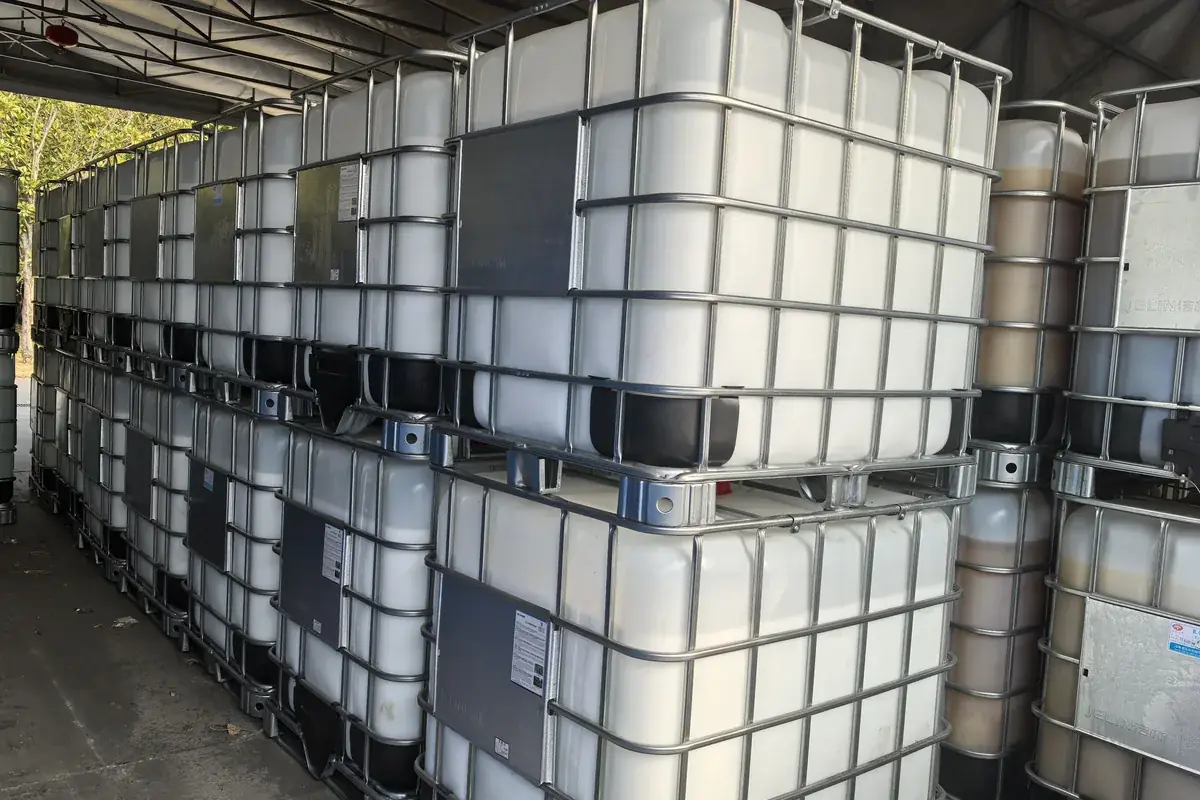
Polyethylene glycol (PEG) is a family of water-soluble polyether compounds made by polymerizing ethylene oxide with ethylene glycol. The number after "PEG" is the approximate molecular weight, so PEG-200, PEG-400, PEG-600, PEG-1000, PEG-2000, PEG-4000 and PEG-6000 are the same chemistry at different chain lengths. This note explains what PEG is, how the grades differ, where formulators use it, including how the grade number is produced, which grade fits which industry, and how to store and check a delivered lot.
PEG is a polyether - a chain of repeating ethylene glycol units capped at both ends. Lower grades (PEG-200, PEG-400) are viscous liquids; higher grades (PEG-4000, PEG-6000) are waxy solids. All are odorless, non-volatile and miscible with water, which is why they appear across pharmaceuticals, cosmetics, textiles and industrial formulations. Our polyether polyol range shares the same polyether chemistry family.
| Grade | Approx. MW | Form at room temp | Typical use |
|---|---|---|---|
| PEG-200 | ~200 | Liquid | Solvent, plasticizer, humectant |
| PEG-400 | ~400 | Liquid | Laxative base, solubilizer, carrier |
| PEG-600 | ~600 | Liquid/soft | Emulsifier helper, lubricant |
| PEG-1000 | ~1000 | Paste | Ointment base, binder |
| PEG-2000 | ~2000 | Wax | Suppository base, binder |
| PEG-4000 | ~4000 | Wax | Tablet binder, excipient |
| PEG-6000 | ~6000 | Wax | Tablet binder, coating, surfactant helper |
PEG is ethylene-oxide based and water-soluble; polypropylene glycol (PPG) is propylene-oxide based and more hydrophobic. PPG shows up where you want water resistance or lower surface activity, while PEG is chosen for solubility and humectancy. Random polyethers blend both behaviors for tuned viscosity and compatibility.
When you shortlist a grade, the working variables are molecular weight, viscosity and any grade-specific monograph (e.g. USP). Exact specifications, SDS and HS code are issued per grade on request - tell us the target market and we will supply the documentation. See our PEG-4000 product page for a representative grade.
The three names in circulation describe the same polymer. 'Polyethylene glycol' is the systematic name, 'PEG' is the standard abbreviation used in grade names, and 'PEG glycol' or 'polyglycol' are older trade shorthand for the same ethylene-oxide chain. What the name does not tell you is the chain length, which is why every PEG grade carries a number after the letters. A supplier asking for your specification should be able to state that number as a range, and should be able to support it with an identity test - hydroxyl value is the usual one, because it falls predictably as the chain lengthens.
Polyethylene glycol is built rather than extracted. Ethylene oxide is added, unit by unit, onto a short starter molecule - water, ethylene glycol or a low glycol - until the chain reaches the length the grade calls for. Because the addition runs through many repeated steps instead of stopping at one, the batch that comes out is a mixture of chains of slightly different lengths, and the number in the grade name is the average of that mixture. That single fact explains most of what surprises buyers: why a grade is quoted as a range on a specification, why two suppliers' material of the same name can differ slightly in viscosity, and why the hydroxyl value on a certificate says more about the batch you received than the round number on the label does.
The same ethylene-oxide chain also travels under a second name. At the low end of the molecular-weight scale the trade convention is polyethylene glycol; at the high end the same polymer is normally called polyethylene oxide (PEO). The boundary between the two names is habit rather than a rule enforced by any standard, and different catalogues place it in different places. That is why the useful question is never which name is on the drum, but what molecular weight range the certificate states. A grade sold as PEG with a very high number, or as PEO with a modest one, is not a contradiction - it is the same chemistry described twice.
Polyethylene glycol is one of the few industrial polymers that can fairly be called chemically quiet. Its chain carries no charge, its ends are simple hydroxyl groups, it does not ionise in water and it does not precipitate in hard water. That quietness is the reason one family of molecules turns up in so many unrelated industries: the polymer is doing a physical job rather than taking part in a reaction.
The pattern worth noticing is that the grade follows the job. Low grades are chosen where the polymer has to be a liquid that dissolves something or carries it. High grades are chosen where it has to be a solid that binds, coats or holds a shape. Molecular weight is the one dial that moves a single chemistry from one duty to the next.
| Job in the formulation | Grade band | What actually decides the choice |
|---|---|---|
| Solubilise or carry a hydrophobic ingredient | Low, liquid | Handleability, and the load of ingredient the system has to hold |
| Build viscosity or bind a solid | Mid to high | The strength and release behaviour the finished solid needs |
| Supply a flexible ethylene-oxide side chain to a copolymer | Functionalised grade | The end group the copolymerisation needs - allyl, hydroxyl or other |
| Control foam, wetting or levelling | Mixed ethylene-oxide / propylene-oxide | The ratio of the two units along the chain, not the chain length alone |
Polyethylene glycol is hygroscopic. Left open, the low grades pull water out of the air and the higher grades take up enough moisture to cake into blocks that no longer flow. Water content is a specification item rather than a cosmetic detail, so what happens in the warehouse reappears later as an out-of-specification batch on the bench.
Whether the grade is a binder in a tablet or a diol in a polyurethane, the same five figures carry most of the information.
Representative published values make the set concrete. PEG-4000 (CAS 25322-68-3, made to Q/320621HA024) is a white flake with hydroxyl value 26-32 mgKOH/g, pH 5.0-7.0 at 1% and colour Pt-Co <=50. PPG-400 (CAS 25322-69-4, Q/320621HA046) is a colourless viscous liquid at hydroxyl value 255-312 mgKOH/g, acid value <=0.5 and water content <=0.5% - the propylene-oxide backbone, and the reason its hydroxyl value sits an order of magnitude above the PEG grade at roughly a tenth of the chain length. APEG-1000 (CAS 27274-31-3) carries hydroxyl value 51-62 mgKOH/g alongside an unsaturation figure of >=0.75 mmol/g that the PEG grades do not report at all, because its chain ends in an allyl group instead of two hydroxyls. Random Polyether BPE-1600 (CAS 9038-95-3) shows what a mixed ethylene-oxide / propylene-oxide chain looks like on paper: content >=99.0%, acid value <=0.5 mgKOH/g, colour Pt-Co <=20 and pH 5.0-7.0 at 1%.
Written out in full, a polyethylene glycol chain is a string of oxyethylene units with a hydroxyl group at each end, and the shorthand for that is HO-(CH2CH2O)n-H. Two things in that formula do all the work. The bracket holds the repeating unit - one ethylene oxide molecule after it has opened and joined the chain - and the subscript n counts how many of those units the chain contains. The two terminal hydroxyls are why the polymer is a diol rather than an inert plastic: they are the handles that later chemistry, and water itself, can attach to.
The subscript n is not the same thing as the grade number, and reading the two as equivalent is the most common mistake made with PEG nomenclature. A grade name such as PEG-400 states a nominal average molecular weight; the formula states a construction. The link between them is arithmetic rather than definition: the grade number is what the chain averages on a balance, and the repeat-unit count is what the structure contains.
The arithmetic is worth doing once, because it explains why grade figures are always quoted as ranges. Each oxyethylene unit contributes about 44 to the chain's molar mass. Polyethylene Glycol 4000 (PEG-4000, CAS 25322-68-3) is published on this site with a molecular-weight range of 3600-4400 rather than a single figure, and that range implies an average of roughly 82 to 100 repeat units per chain. The implication is approximate by construction: the grade is an average over a distribution of chain lengths, so no single chain in the drum has to match it.
Polymerisation does not produce one molecule. It produces an ensemble: chains of different lengths, formed in different proportions, all sharing the same formula and the same chemistry. That is why polyethylene glycol is described in the plural - PEG compounds, polyethylene glycols - and why a specification range is more useful than a single number. The published molecular-weight range is the width of that ensemble, not a tolerance around a target that every chain hits.
How the grade number is actually produced, and how it is confirmed on a certificate, is the subject of the note on PEG molecular weight grades. For the propylene-oxide counterpart of the same backbone, and for the way chain length flips the hydroxyl figure, compare Polypropylene Glycol 400 (PPG-400, CAS 25322-69-4).
A PEG derivative is the same oxyethylene backbone with different chemistry at the ends or along the chain. The backbone keeps the properties that make PEG useful - water solubility, no charge, chemical quietness - while the new end groups give the molecule something to do: react into a polymer, hold an oil phase, or sit at an interface. Most commercial PEG products outside the raw polyol range are derivatives of this kind, which is another reason the family is described in the plural.
Concrete points of reference from the range: Allyl Polyethylene Glycol APEG-1000 (CAS 27274-31-3) for the allyl-terminated family, AEO-9 (C12-14 Alcohol Ethoxylate) for the PEG ether family, and Tween-80 (Polysorbate 80) for the sorbitan-ester family, which is the same one discussed in the comparison of nonionic and anionic surfactants.
The figures worth reading together on a PEG or PEG-related specification are the molecular weight range, the hydroxyl value, the physical form and the colour, because between them they describe both the chain length and how clean the chain is. Published values from this range make the relationship visible:
| Grade | Identity | Published molecular weight | Published hydroxyl value | Physical form |
|---|---|---|---|---|
| PEG-4000 | Polyethylene glycol, CAS 25322-68-3 | 3600-4400 | 26-32 mgKOH/g | White flake, colour (Pt-Co) 50 or below |
| APEG-1000 | Allyl polyethylene glycol, CAS 27274-31-3 | about 1000 | 51-62 mgKOH/g | White to light-yellow solid |
| PPG-400 | Polypropylene glycol, CAS 25322-69-4 | 360-440 | 255-312 mgKOH/g | Colourless viscous liquid |
| BPE-1600 | Random polyether, CAS 9038-95-3 | series-level reference only | not published for this grade | Colourless liquid, content 99.0% or above |
One transparency note on that table: the molecular weight shown for BPE-1600 is a series-level reference value, not a figure specific to the grade - the source record lists other members of the series, so the designation should be confirmed with the supplier before it is used in a calculation. Where a figure is not in the documented record, this page leaves it out rather than filling the gap. The same discipline applies to the low-molecular-weight PEG grades: their customer specification values are not part of the record held here, so no numbers are shown for them. For the interface chemistry behind these grades, continue with what an emulsifier is and how the types differ, or send the grade and application through the contact page for a specification pack.
For how the grade number is produced and how it behaves on a certificate, continue with what the number after "PEG" tells you. For the same polyether family in foam control and polyurethane work, see polyether polyols and block polyethers. For an application where a water-soluble polymer has to leave nothing behind on the fibre, see levelling, penetration and scouring in textile dyeing. And for the interface chemistry that begins once a polyether is ethoxylated further into a surfactant, see what an emulsifier is and how the ionic types compare.
Choosing the right PEG grade depends on your formulation and regulatory path. Send us your application and we will shortlist grades and prepare samples.
Polyether Polyol
polyethylene glycol 4000
Polyether Polyol
polypropylene glycol 400
Polyether Polyol
random polyether BPE-1600
Polyether Polyol
APEG-1000 allyl polyethylene glycol
Polyethylene glycol is a family of water-soluble polyether compounds made by polymerizing ethylene oxide with ethylene glycol. The number after "PEG" is the approximate average molecular weight, so PEG-400, PEG-4000 and PEG-6000 are the same chemistry at different chain lengths - liquid at the low end, waxy solid at the high end.
PEG-200, PEG-400 and PEG-600 are liquid or soft grades used as solvents, carriers and solubilisers; PEG-1000 and PEG-2000 are pastes and waxes used as bases and binders; PEG-4000 and PEG-6000 are waxy solids used as binders, coatings and excipients.
PEG is ethylene-oxide based and water-soluble; PPG (polypropylene glycol) is propylene-oxide based and markedly more hydrophobic. PPG is chosen where water resistance or lower surface activity is wanted, PEG where solubility and humectancy matter.
Yes - they describe the same ethylene-oxide chain. 'Polyethylene glycol' is the systematic name, 'PEG' is the standard grade-name abbreviation and 'PEG glycol' is older trade shorthand. None of the three tells you the chain length, which is why the grade number matters.
PEG is the standard abbreviation for polyethylene glycol, a family of water-soluble polyether chains built by adding ethylene oxide onto a short starter glycol. The letters describe the backbone; the number that follows them is the approximate average molecular weight of the chain, and that number is what sets the physical form - liquid at the low end, paste in the middle, waxy solid at the high end.
They are the same polymer described under two names. Low molecular weights are conventionally called polyethylene glycol; high molecular weights are conventionally called polyethylene oxide. The boundary is trade habit rather than a published standard, so the reliable identifier is the molecular weight range on the specification, not the name printed on the drum.
Its jobs follow the chain length. Low grades act as solvents, carriers, solubilisers and humectants; mid grades as bases and thickeners; high grades as binders, coatings and mould-release aids. That is why the family appears in pharmaceutical and cosmetic processing, liquid detergents, textile dyeing and finishing, polyurethane and polyether synthesis, and concrete admixtures - the polymer is doing a physical job rather than taking part in a reaction.
Yes. PEG is hygroscopic: the lower grades will pull moisture out of the air if a container is left open, and higher grades cake into blocks. Water content is a specification item for exactly that reason, so store sealed and dry, avoid moisture cycling around opened flake drums, and re-test water content on any container that has stood open before releasing the lot.
The structural formula is written HO-(CH2CH2O)n-H. The bracket holds the oxyethylene repeating unit, the subscript n counts how many of those units the chain contains, and the two hydroxyl groups at the ends are what make the polymer a diol rather than an inert material. The formula describes the construction of the chain; it does not state a molecular weight, which is why a separate grade figure is needed alongside it.
Because polymerisation produces an ensemble of chains of different lengths rather than a single molecule. All of them share the same repeating unit and the same terminal chemistry, but they differ in how many units they contain, and they are present in different proportions. That distribution is why specifications quote a molecular-weight range, and why two lots of the same nominal grade can differ slightly in distribution while both stay within the published range.
No. The grade number is a nominal average molecular weight, so PEG-4000 is quoted as a range rather than a single figure - the published range on this site is 3600-4400. Because the repeating unit contributes roughly 44 to the molar mass, that range implies an average of approximately 82 to 100 repeat units per chain, but no individual chain is required to match it. Where a process is sensitive to the distribution, the range is the item to tighten with the supplier.
Share your application, target market and required volume — our team responds with selection and lead time.
Contact us