
Tween-80 (Polysorbate 80)
Nonionic Surfactants
Tween-80
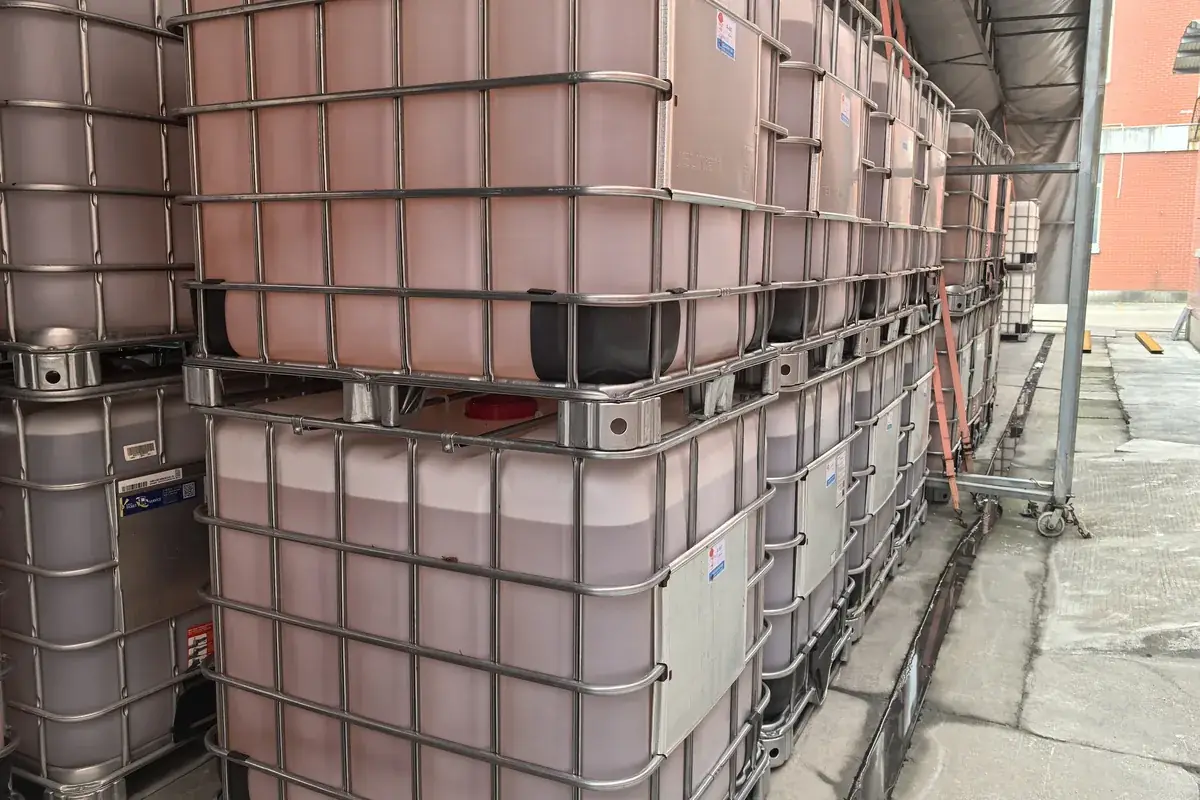
An emulsifier is an amphiphile: a water-loving (hydrophilic) head joined to an oil-loving (lipophilic) tail. Most explanations stop at the definition. This note focuses on the part that actually decides water solubility, HLB and hard-water behaviour — the hydrophilic head group — and how its chemistry drives emulsifier selection.
The hydrophilic head is the polar, water-attracting end of the molecule. At an oil-water interface the heads face the water and the tails face the oil, which is what lowers interfacial tension and keeps droplets small and dispersed. HLB (hydrophilic-lipophilic balance) is, at heart, a ratio of the polar head to the nonpolar tail: a bigger or more polar head pushes the balance toward water; a small head with a long tail pushes it toward oil.
Because HLB is a head-to-tail balance, the head group sets the baseline. A large, highly polar head (or a long ethoxylate chain on a nonionic) gives a high HLB and favours oil-in-water systems; a small head with a long lipophilic tail gives a low HLB and favours water-in-oil. For nonionics, ethoxylation length is the main HLB knob — which is why the same sorbitan backbone can span a wide HLB range simply by adding ethoxy units.
Hard water carries calcium and magnesium. Charged (anionic) head groups bind these ions and can precipitate or lose performance; uncharged (nonionic) head groups do not. That single difference is why nonionic emulsifiers are the backbone of most packages used in salty, alkaline or water-quality-uncertain systems, while anionics are added in small amounts where their wetting power is needed and the water is soft to moderate.
In practice the head group is the first filter. For a nonionic backbone, compare the ethoxylated sorbitan Tween-80 (Polysorbate 80, CAS 9005-65-6, HG/T 3510) against the lower-HLB sorbitan ester Span-80; for an ethoxylated-phenol nonionic used in agro concentrates, see Pesticide Emulsifier 600 (CAS 99734-09-5, a styrenated-phenol polyoxyethylene ether); where fast wetting in harder water is required, the anionic Isooctyl Phosphate Ester is the usual add-on. The final grade still comes from dilution and storage tests in your actual water.
Start from the emulsifier definition, then see how to choose an emulsifier for agrochemicals and nonionic vs anionic surfactants.
Head-group choice is fastest with your active, solvent and water quality in hand. Send us the details and we will shortlist grades.
Nonionic Surfactants
Tween-80
Nonionic Surfactants
Span-80
Emulsifiers
pesticide emulsifier 600
Textile Auxiliaries
isooctyl phosphate ester
It is the polar, water-attracting end of the amphiphile. At the oil-water interface the heads face the water and the tails face the oil; HLB is essentially the ratio of this polar head to the nonpolar tail.
A larger or more polar head (or a longer ethoxylate chain on a nonionic) raises HLB and favours oil-in-water emulsions; a small head with a long lipophilic tail lowers HLB and favours water-in-oil. For nonionics, ethoxylation length is the main HLB knob.
Nonionic heads are uncharged and do not bind calcium or magnesium, so they stay stable in hard or salty water. Anionic heads carry a charge and can precipitate with those ions, which is why they are used more cautiously in hard water.
Nonionic ethoxylates are the workhorse backbone (e.g. ethoxylated phenols and sorbitan esters), often with a small anionic phosphate portion for wetting. The exact grade is confirmed by dilution and storage tests in the formulation's actual water.
Share your application, target market and required volume — our team responds with selection and lead time.
Contact us