
Span-80 (Sorbitan Oleate)
Nonionic Surfactants
Span-80
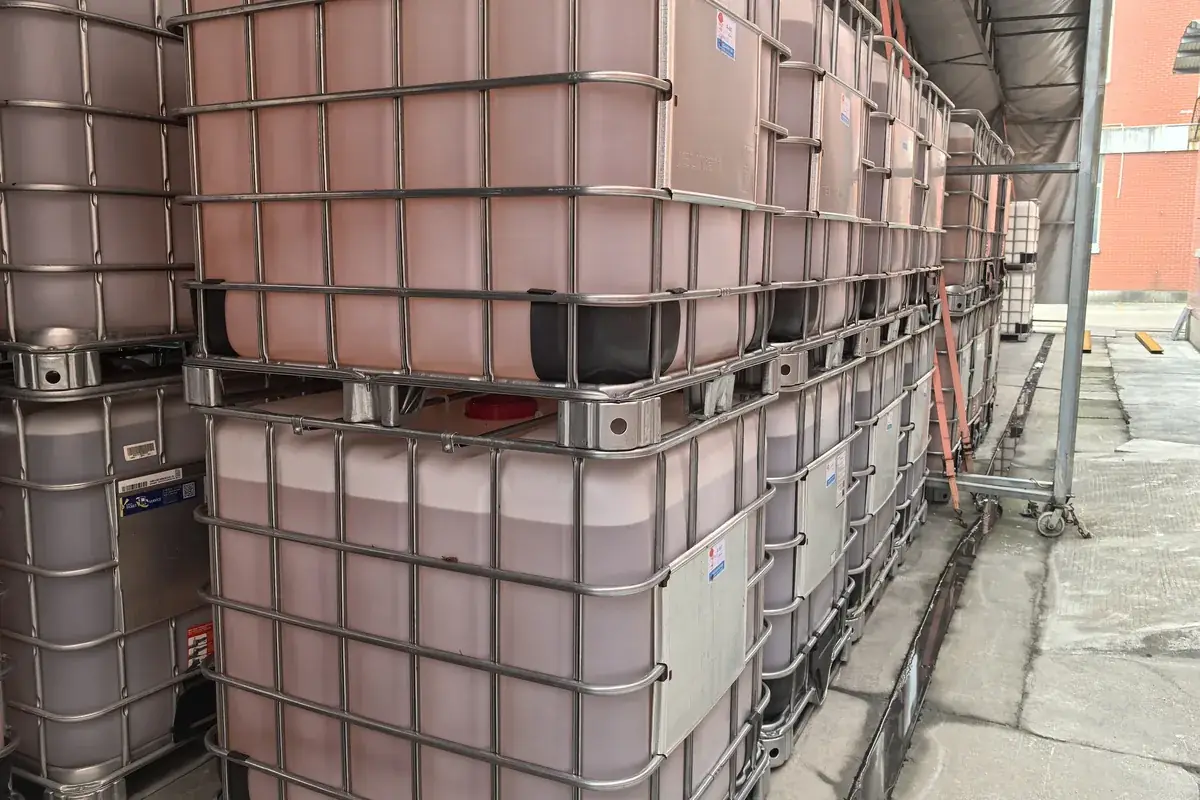
An emulsifier is a surfactant that stabilizes an emulsion - a mix of two liquids that do not normally blend, most often oil and water. It lets the dispersed phase stay suspended instead of separating, which is why emulsifiers appear in agrochemicals, cosmetics, food and textiles. This note defines what an emulsifier is, compares the main ionic types, and sets out where the line between an emulsifier and a surfactant actually sits.
An emulsifier is a molecule with a water-loving (hydrophilic) head and an oil-loving (lipophilic) tail. It sits at the oil-water interface and lowers surface tension so droplets stay small and dispersed. The balance of those two ends is summarized by HLB (hydrophilic-lipophilic balance).
An anionic surfactant carries a negative charge on its hydrophilic head. Examples include sulfate and phosphate esters. Anionics are strong wetting and dispersing agents but are more sensitive to hard water and electrolytes. In our range, <a href="/products/isooctyl-phosphate-ester">isooctyl phosphate ester</a> is a representative anionic emulsifier/wetting agent.
A nonionic surfactant has no net charge - its head is usually a polyether (ethoxylate) or a sugar/sorbitol group. Nonionics tolerate hard water, wide pH and electrolytes, which makes them the backbone of most emulsifier packages. Common nonionics include sorbitan esters such as <a href="/products/span-80">Span-80 (sorbitan oleate)</a> and their ethoxylates like <a href="/products/tween-80">Tween-80 (polysorbate 80)</a>.
| Property | Anionic | Nonionic |
|---|---|---|
| Charge | Negative | None |
| Hard-water tolerance | Lower | Higher |
| Wetting/dispersing | Strong | Moderate-good |
| Typical use | Detergents, hard-surface | Emulsifier packages, mild systems |
In agrochemicals they keep active ingredients dispersed (see our Pesticide Emulsifier 600); in textiles they aid leveling and penetration (levelling agent O-25, penetrant JFC); in personal care they solubilize and stabilize. The right choice follows the active, solvent and target market.
Two datasheets for the same molecule can describe it once as a surfactant and once as an emulsifier, and neither one is wrong. The two words come from different questions. One answers what kind of molecule this is; the other answers what job the molecule has been given. This section sets the boundary in plain terms, gives a four-question test you can run on any product name, and shows where the two words legitimately overlap.
A surfactant is a chemistry class: any molecule built from a water-loving (hydrophilic) head and an oil-loving (lipophilic) tail that migrates to an interface and lowers the tension there. An emulsifier is a job: a surfactant that has been selected for a specific oil phase and dosed so that an oil-water mixture stays dispersed long enough to be useful. Every emulsifier in commercial use is therefore a surfactant, but most surfactants sold are never asked to hold an emulsion at all. The relationship is not surfactant versus emulsifier; it is surfactant the class, emulsifier the job inside it.
| Question to ask | If the answer is yes | If the answer is no |
|---|---|---|
| Which interface must it hold? | An oil-water interface means emulsification is the job | Air-liquid means foam control; liquid-solid means wetting or dispersion |
| Must it survive dilution, storage and shear? | Design and dose it as an emulsifier, then test stability | A wetting or dispersing dose is usually enough |
| Does the supplier quote an HLB or a cloud point? | It is being screened as an emulsifier against an oil phase | It is being sold for a surface effect, not for emulsion life |
| Would phase separation be visible to your customer? | Emulsion stability becomes the acceptance criterion | Measure the surface effect instead |
Emulsification is not a second chemistry laid on top of surfactancy. It is the same chemistry under three extra demands. First, the interface in question has to be oil-water rather than air-liquid or liquid-solid. Second, enough emulsifier has to be present to cover the new droplet surface area that the process keeps creating, which is why emulsion dose follows oil load and shear rather than a wetting target. Third, the film that forms has to survive service conditions: pH, electrolyte load, temperature cycling, freeze-thaw, dilution in the customer's water, and the weeks or months between filling and use. A surfactant that wets brilliantly can fail all three and never work as an emulsifier at all.
The same logic explains why a required-HLB screen belongs to emulsifier selection and not to surfactant selection in general. The oil phase in front of you has an HLB it needs. An emulsifier is screened against that number before any trial and then confirmed by test. On its own the HLB decides nothing, but it removes most of the wrong candidates cheaply - which is exactly why suppliers quote it for emulsion grades and stay silent about it for wetting agents.
| Role | What it has to achieve | How it is judged |
|---|---|---|
| Wetting agent | Lower contact angle so a liquor spreads over a fibre, a metal surface or a pigment | Spread, penetration speed and contact angle |
| Dispersant | Keep solid particles apart so they stay suspended | Settling and re-dispersibility over time |
| Solubiliser | Bring a hydrophobic material into a clear, stable solution | Clarity, and clarity after dilution |
| Emulsifier | Hold two immiscible liquids as a dispersed droplet phase that survives service | No separation, creaming or coalescence across the required life |
One molecule can appear in all four rows at different doses, which is precisely why the four rows are defined by the duty and not by the substance. When a datasheet seems to contradict itself, it is usually answering a different row than the one you had in mind.
Take a name like Tween-80 (Polysorbate 80, CAS 9005-65-6, conforms to HG/T 3510). Step one, chemistry: it is published as a nonionic surfactant and as an oil-in-water emulsifier and solubiliser, so the class and the duty are stated together. Step two, duty: an oil-in-water direction means the balance sits on the water-loving side, which is why the same sorbitan backbone appears at the opposite end as the lipophilic Span-80 (Sorbitan Oleate, CAS 1338-43-8, conforms to HG/T 3508), published as a water-in-oil emulsifier. Step three, screen: where a supplier does publish the balance, use it - the ethoxylated castor oil Emulsifier EL-40 (PEG-40 Castor Oil, CAS 61791-12-6, HLB 13-14, 1% cloud point 70-84 degC), the polyoxyethylene stearate Emulsifier SG-10 (CAS 9004-99-3, HLB 12-13) and the fatty alcohol ethoxylate AEO-9 (CAS 68439-50-9, HLB 13-14) all sit in the same oil-in-water window. Step four, honesty about gaps: for the agricultural series Pesticide Emulsifier 600 (CAS 99734-09-5, a styrenated-phenol polyoxyethylene ether) only the appearance is published, so the balance value and emulsion-stability figures are requested rather than assumed. Step five, service: whatever the screen suggests, the grade still has to be confirmed by a dilution and storage test in your own oil phase and your own water.
Every emulsifier is described by two opposite preferences inside one molecule. The hydrophilic part is the end that water attracts - the polar head group. The hydrophobic part is the end that water rejects - the oil-loving tail, which is why the same tail is also called lipophilic. Neither half does the job alone: without the hydrophilic head the molecule would not disperse in water at all, and without the hydrophobic tail it would have no reason to sit at an oil-water interface.
This is why two emulsifiers built on the same head group can behave quite differently in service. Change the tail and the balance moves, even though the water-facing end has not changed at all.
The hydrophilic-lipophilic balance is best read as a coordinate on a line between two extremes, not as a score where higher is better. A molecule sitting toward the hydrophilic end is more comfortable in water and favours oil-in-water systems; a molecule sitting toward the hydrophobic end is more comfortable in oil and favours water-in-oil systems. Moving a molecule along that line is a matter of chemistry, not of dose: adding more of a low-balance emulsifier does not turn it into a high-balance one.
| What you are reading | Toward the hydrophilic end | Toward the hydrophobic end |
|---|---|---|
| Head group | Large and strongly polar | Small or absent |
| Ethoxylate chain on a nonionic | Longer | Shorter |
| Behaviour in water | Readily disperses | Needs an oil phase or a co-surfactant |
| Emulsion direction it favours | Oil-in-water | Water-in-oil |
| Effect of the tail on charge | No effect - charge comes from the head | No effect - the tail is uncharged |
Where a documented grade carries a published balance figure, that figure is a position on this line rather than a quality rating. On this site, Emulsifier EL-40 is published with an HLB of 13-14 and Emulsifier SG-10 with an HLB of 12-13; both are nonionic and both sit on the water-favouring side, which is exactly what their oil-in-water service implies.
The word hydrophobic is often borrowed from coatings and surface treatments, where it describes a treated surface that sheds water. In emulsifier chemistry it means something narrower: the tail of the molecule prefers oil to water. An emulsifier with a hydrophobic tail is not making a water-repellent surface - it is holding oil and water together. Keeping the two meanings apart avoids a common specification mistake, where a water-repellent additive is ordered for a job that actually needed an emulsifier.
Worked examples of the same screening order are set out in the notes on nonionic versus anionic surfactants for the charge-tolerance step, and on selecting an emulsifier for agrochemicals for the application-led step.
The same head-and-tail reading applies to a real grade. Tween-80 (Polysorbate 80, CAS 9005-65-6, conforms to HG/T 3510) carries an ethoxylated sorbitan head and is documented here as an oil-in-water emulsifier and solubiliser, while Span-80 is the related sorbitan ester documented as a water-in-oil emulsifier. Reading the two names together is a compact lesson in how the balance moves while the family stays the same. For the head-group side of the same story, see how the hydrophilic head group drives the balance.
The word nonionic describes the head group and nothing else. Every surfactant is a head-and-tail molecule: the tail is the oil-loving part and is built from much the same hydrocarbon chemistry whatever the family, while the head is the part that meets the water. It is the head that decides whether the molecule carries a charge. An anionic head carries a negative charge, a cationic head a positive one, and an amphoteric head can hold either depending on the pH around it. A nonionic head carries none.
In practice a nonionic head is almost always one of two things: a short chain of ethylene oxide units, or a polyol group such as a sorbitol ring with free hydroxyls. Both are uncharged, and both are water-loving for the same reason: the oxygen atoms in them form hydrogen bonds with water instead of ionising in it. That single difference - hydrogen bonding rather than ionisation - is the source of almost every behaviour described below.
Nonionic is a class, not a substance. Grades that carry no charge fall into a handful of families, and the family usually tells you more about service behaviour than the word nonionic does.
| Ethoxylated alcohols | polyether chain on a fatty alcohol | AEO-9 (C12-14 alcohol ethoxylate) | CAS 68439-50-9; HLB 13-14; 1% cloud point 70-95 degC |
| Ethoxylated oils | polyether chain on a triglyceride | Emulsifier EL-40 (PEG-40 castor oil) | CAS 61791-12-6; HLB 13-14; 1% cloud point 70-84 degC |
| Ethoxylated fatty acids | polyether chain on a fatty acid | Emulsifier SG-10 (polyoxyethylene stearate, 10 EO) | CAS 9004-99-3; HLB 12-13; saponification value 75-85 mgKOH/g |
| Sorbitan esters and their ethoxylates | sorbitol ring, optionally ethoxylated | Span-80 (sorbitan oleate) / Tween-80 (polysorbate 80) | CAS 1338-43-8, standard HG/T 3508 / CAS 9005-65-6, standard HG/T 3510 |
| Alkanolamides | amide of a fatty acid and an ethanolamine | CMEA (coconut monoethanolamide) / CDEA 6501 | CAS 68140-00-1 / CAS 90170-44-3 |
| Copolymers and reactive types | mixed polyether or silicone-polyether chain | Water-Soluble Silicone Oil (reactive nonionic) | silicone-polyether copolymer; purity at least 99% (published) |
Two things follow from that table. First, the same nominal number does not travel between families: 40 units of ethylene oxide on castor oil is not the same molecule as 40 units on a fatty alcohol, and the two will not simply interchange in a formula. Second, family membership is worth checking before you accept a substitute, because the word nonionic on its own promises only the absence of charge.
Take the charge off the head and three practical properties change at once.
The same absence of charge also removes two things that formulators sometimes want. There is no substantivity, so a nonionic will not exhaust onto a fibre or a surface the way a cationic softener or antistatic agent does - which is why those finishes are built on cationic or amphoteric chemistry instead. And there is no charge to drive foam, so where a system needs foam that stands up, the answer is a nonionic chosen specifically for that job: alkanolamides such as CMEA and CDEA 6501 are published as foam boosters and stabilisers rather than as emulsifiers.
An ethoxylated nonionic has one specification item that no ionic surfactant has. Its water solubility falls as temperature rises, so a clear aqueous solution turns cloudy at a characteristic temperature - the cloud point. Below the cloud point the ethoxylate chain is hydrated and the molecule dissolves; above it the water leaves the chain and the surfactant separates out.
The cloud point is therefore the first figure to check when a nonionic has to work hot. A grade that is comfortably soluble at room temperature can be above its cloud point in a 70 degC bath, and an emulsion that behaved in a lab beaker will not necessarily survive the process line.
For an ethoxylated grade the number in the name usually counts ethylene oxide units, which is the main solubility knob: more units shift the molecule towards water and towards oil-in-water behaviour, fewer units leave it oil-leaning. Three published examples show the same convention across different backbones.
Two cautions come with that. The number is a nominal average rather than a count on every molecule in the drum, and it is not an HLB - a grade can be published with both a name number and an HLB figure, and the two are different statements about the same product. Where a supplier publishes an HLB, read it as a position on the scale described above rather than as a quality score.
One consequence of everything above is that the two classes are complementary rather than alternative. A charged surfactant supplies wetting or dispersion speed; an uncharged one supplies tolerance. Systems that have to work in real water at a real pH are usually built with both, and the family that can sit next to either is the nonionic, because it tolerates the charges on both sides of it. CMEA, for instance, is published as working with anionic surfactants such as SLS and SLES for synergistic foam and viscosity.
It is also worth remembering that the absence of charge is not by itself enough to make a molecule a surfactant. Nonionic polyacrylamide (NPAM, CAS 9003-05-8) is published on this site as a nonionic polymer flocculant, and its own product record notes that it is a flocculant rather than a classical surfactant: it carries no charge, but it does not have the head-and-tail architecture that does the interfacial work. The word nonionic describes the charge; it does not describe the job.
The nonionic grades used as examples above are documented individually on this site: AEO-9 (C12-14 alcohol ethoxylate), Emulsifier EL-40 (PEG-40 castor oil), Emulsifier SG-10, Tween-80 (polysorbate 80), Span-80 (sorbitan oleate), CMEA, CDEA 6501, Lipalbin and NPAM.
For what happens when the charged and uncharged classes are blended rather than compared, continue with the comparison of nonionic and anionic surfactants, and for the polymer chain that carries the ethoxylate head see what polyethylene glycol is.
Continue with how the hydrophilic head group drives the balance, then nonionic versus anionic selection, and for an applied case see choosing an emulsifier for agrochemical formulations.
Emulsifier selection is fastest with your active, solvent and market in hand. Send us the details and we will shortlist grades.
Nonionic Surfactants
Span-80
Nonionic Surfactants
Tween-80
Textile Auxiliaries
isooctyl phosphate ester
Emulsifiers
pesticide emulsifier 600
Nonionic Surfactants
levelling agent O-25
Textile Auxiliaries
penetrating agent JFC C8-C10 alcohol ethoxylate
Nonionic Surfactants
emulsifier EL-40 PEG-40 castor oil
Emulsifiers
emulsifier SG-10 polyoxyethylene stearate
Nonionic Surfactants
AEO-9 fatty alcohol ethoxylate
An emulsifier is a surfactant that stabilizes an emulsion - typically oil and water - by sitting at the interface with a hydrophilic head and a lipophilic tail, lowering surface tension so droplets stay small and dispersed.
An anionic surfactant carries a negative charge on its hydrophilic head. Sulfate and phosphate esters are common examples; they are strong wetting and dispersing agents but more sensitive to hard water and electrolytes.
A nonionic surfactant has no net charge; its head is usually a polyether (ethoxylate) or sugar/sorbitol group. Nonionics tolerate hard water, wide pH and electrolytes, making them the backbone of most emulsifier packages.
Anionics carry a negative charge and give strong wetting and dispersion but are hard-water sensitive; nonionics are uncharged and more tolerant of hard water and electrolytes. The choice follows the active, solvent and target market.
A surfactant is a chemistry class - any molecule with a hydrophilic head and a lipophilic tail that lowers interfacial tension. An emulsifier is a surfactant that has been selected and dosed to hold an oil-water mixture as a stable dispersion. So an emulsifier is a surfactant with a specific job; the words describe a class and a duty, not two rival families.
Yes. Emulsification at an oil-water interface is carried out by surfactants, so every commercial emulsifier is a surfactant by chemistry. The reverse is not true: most surfactants are sold for wetting, dispersion, foaming or detergency and are never asked to hold an emulsion.
In principle the architecture allows it, but in practice three extra demands have to be met: the interface must be oil-water, the dose must cover the new droplet surface area created by shear, and the film must survive pH, electrolyte, temperature cycling and storage. A surfactant that wets well can fail all three, which is why emulsion grades are screened and tested rather than assumed.
Because both are true at once. A grade can be a nonionic surfactant and an oil-in-water emulsifier; the first word describes the chemistry, the second describes the duty. Catalogue language also groups by end use, so a grade sold mainly into emulsions tends to carry the emulsifier label even though its chemistry is the same class of molecule.
They are the two ends of the same molecule. Hydrophilic describes the polar head that water attracts; hydrophobic, also called lipophilic, describes the oil-loving tail that water rejects. The molecule sits at the oil-water interface with the head in the water and the tail in the oil, and that arrangement is what stabilises the emulsion.
Yes, as part of a pair. A strongly hydrophobic emulsifier favours water-in-oil systems, so in a water-based formulation it is normally combined with a more hydrophilic partner to reach the balance the system requires. Used alone at the wrong balance it will not hold the emulsion, however much is added.
No. The balance is a coordinate, not a quality score. What decides performance is whether the grade's balance matches the balance your particular oil, solvent and water combination requires. A grade that matches will outperform a higher-balance grade that does not.
It describes the head group: a nonionic surfactant carries no net charge on the part of the molecule that meets the water. That head is normally either a short ethylene oxide chain or a polyol group such as a sorbitol ring. Because the head is uncharged rather than ionised, hardness ions, pH and dissolved salts all have much less effect on how the surfactant behaves.
The families you will meet most often are ethoxylated alcohols, ethoxylated oils and ethoxylated fatty acids (all built on a polyether chain), sorbitan esters and their ethoxylates such as polysorbates, and alkanolamides. Copolymers and reactive types such as silicone-polyether grades form a further group. The family matters because a number in the grade name does not transfer between backbones.
Yes. Nonionic, non-ionic and non ionic are the same term written three ways, and all three appear in search queries and in supplier literature. The chemistry does not change with the hyphen or the space, so a document that says non-ionic and a label that says nonionic are describing the same class of head group.
Because there is no charge on the head for anything to bind to or screen. Hardness ions such as calcium and magnesium bind to charged head groups, which is how a soap or a sulfate surfactant can precipitate in hard water; dissolved salts likewise screen the charges on ionic surfactants and change their performance. A nonionic head is hydrated through hydrogen bonding instead, so neither mechanism applies - although an ethoxylated grade still loses solubility when the bath gets hot, which is what the cloud point measures.
Share your application, target market and required volume — our team responds with selection and lead time.
Contact us