
Tween-80 (Polysorbate 80)
Nonionic Surfactants
Tween-80
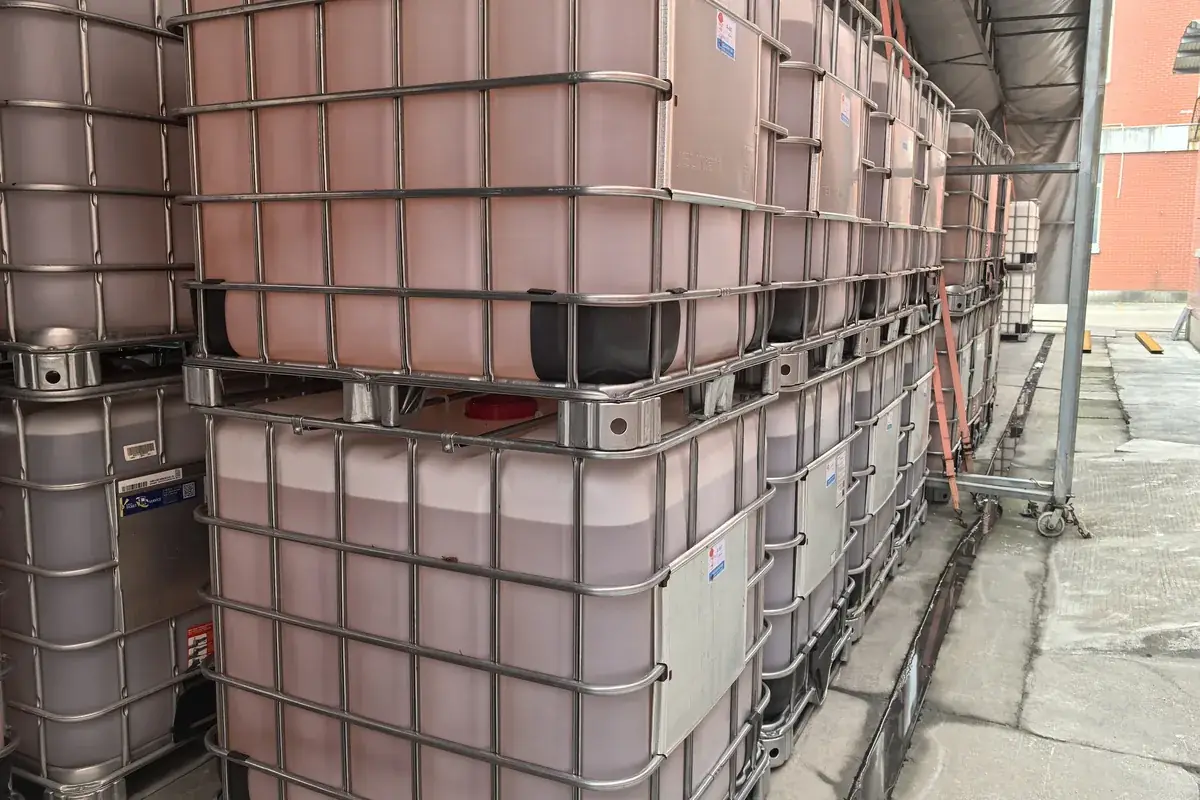
Sooner or later a formulation or purchasing file carries the line "or equivalent" next to a polysorbate grade, and somebody has to decide what that permission actually allows. The phrase is doing two different jobs at once: it says the chemistry may be sourced from somewhere else, and it quietly assumes that two grades sold under the same trade name will behave the same way. The first assumption is usually safe. The second is where substitution programmes go wrong.
A Tween 80 equivalent is only equivalent when three things line up at the same time: the chemical identity, the specification block, and the lot-level certificate. If any one of the three is missing or assumed, you do not have an equivalent - you have a candidate that still has to be qualified. Trade names travel easily between suppliers; specifications and certificates do not.
The practical rule that follows is simple. Treat the trade name as a description of a family position, not as a performance guarantee. Then compare the actual numbers on the document in front of you, in the order set out below, and confirm the shortlist on the bench before it enters a formulation record.
Tween 80 and Polysorbate 80 name the same molecule. The polysorbate form is the systematic, inventory-style name: it declares the chemistry, that an ethoxylated sorbitan carries a fatty acid tail, and the trade form is a commercial shorthand that has been in circulation for so long it has become the default way formulators talk. Neither name tells you the numbers. That is what the specification block is for.
On this site the grade is documented as Tween-80 (Polysorbate 80, CAS 9005-65-6, conforming to HG/T 3510) and described as an oil-in-water emulsifier and solubiliser. How the trade-name number relates to the rest of the ethoxylated sorbitan family is set out separately in the comparison of Tween 80 against Tween 40, which is the right place to settle a within-series choice.
For an ethoxylated sorbitan ester, the specification block is short enough to read in full, and every item in it is doing work. Ask for the same six items from every candidate and put them side by side before you look at price:
A candidate that matches on identity but reports nothing for the middle four items has not demonstrated equivalence. It has only demonstrated that it is the right kind of molecule, which is a much weaker statement.
| Item to compare | Why it decides the substitution | Where the answer must come from |
|---|---|---|
| Registry number | Fixes the molecule; a mismatch ends the comparison immediately. | Candidate's own specification or certificate |
| Governing standard | Makes the specification auditable and repeatable. | Candidate's technical data sheet |
| Appearance at reference temperature | Decides how the grade is pumped, melted and charged. | Candidate's technical data sheet |
| Hydroxyl value and method | Tracks the free hydroxyls; one half of the balance. | Candidate's certificate of analysis |
| Saponification number and method | Counts ester content; most sensitive to feedstock change. | Candidate's certificate of analysis |
| Acid value and water content | Drift with storage and handling; both are ceilings. | Candidate's certificate of analysis |
| Emulsion direction in service | The functional job has to survive the swap, not just the paperwork. | Your own bench test |
Two grades where a balance value is documented on this site show why the figure has to be read per grade rather than per family: Emulsifier EL-40 (PEG-40 Castor Oil) is published with an HLB of 13-14 and a 1 percent cloud point of 70-84 degrees Celsius, while Emulsifier SG-10 (Polyoxyethylene Stearate, 10EO) is published with an HLB of 12-13 and a saponification value of 75-85 mgKOH/g. Both are nonionic and both are water-favouring, yet neither figure can be applied to a different grade.
The Tween family is built the same way for every member: a sorbitan ring carries a fatty acid, and ethylene oxide units are added to the remaining hydroxyls to make the molecule water-soluble. The fatty acid sets how oil-loving the tail is; the ethylene oxide count sets how polar the head is. The number in the trade name is an index into that construction, not a strength rating, so a higher number does not mean a more powerful emulsifier.
The consequence for substitution work is that the series name narrows the search and the specification closes it. Where the job is to hold an oil-in-water emulsion or to bring an oil-soluble component into clear aqueous solution, an ethoxylated sorbitan ester is the conventional reference point; where the job is to build a water-in-oil system, the non-ethoxylated sorbitan ester is the usual partner. The pairing logic is the same one that governs emulsifier selection elsewhere, and it is worth settling before any candidate is approached.
The oil-favouring half of the pair is documented on this site as Span-80 (Sorbitan Oleate, CAS 1338-43-8, conforming to HG/T 3508). For transparency about what the published record contains: this site does not publish a balance figure for the polysorbate grade referenced above, because that value is not part of the specification record held for it, and the published record here also carries no specification block for the other polysorbate members of the series. Treat any balance or grade figure you obtain from elsewhere as supplier-specific and verify it against a lot certificate before it enters a formulation record.
Where the requirement turns out to be wetting or detergency rather than emulsification, the substitution question changes shape entirely, because the functional class changes with it. A documented nonionic alternative in that case is AEO-9 (C12-14 Alcohol Ethoxylate, HLB 13-14, cloud point 70-95 degrees Celsius), which is published as an emulsifier, wetting agent and dispersant rather than as a sorbitan ester.
Paperwork narrows the field; it does not certify a grade. The following sequence takes an afternoon and answers the question the documents cannot, which is whether the emulsion survives in your oil, your water and your plant conditions:
The grade referenced here is documented for oil-in-water emulsions and the solubilisation of oils, cosmetic and personal-care formulations, pharmaceutical solubiliser and carrier duties, food emulsification on the applicable grade, and industrial dispersing and wetting. That spread is the reason the equivalence question comes up so often: the same trade name is asked to serve very different functions, and the evidence needed changes with the function. Where the duty is agricultural, the pairing conventions are set out in emulsifier selection for agrochemicals; where the question is which family to start from at all, start with nonionic versus anionic surfactants.
For transparency, this is what the published record on this site contains, and what it does not contain:
For the definition behind the terms used here, continue with what an emulsifier is and how the types differ. For the head-group chemistry that decides how a grade behaves, see how the hydrophilic head group drives the balance.
Substitution work is fastest with your oil phase, your target emulsion direction and the specification you release against in hand. Send us the details and we will shortlist the grades that sit near your required balance, together with the documentation your quality team needs.
Nonionic Surfactants
Tween-80
Nonionic Surfactants
Span-80
Nonionic Surfactants
emulsifier EL-40 PEG-40 castor oil
Emulsifiers
emulsifier SG-10 polyoxyethylene stearate
Nonionic Surfactants
AEO-9 fatty alcohol ethoxylate
Nonionic Surfactants
Lipalbin nonionic emulsifier HLB 11-12 cosmetics emulsion
Share your application, target market and required volume — our team responds with selection and lead time.
Contact us