
Polyethylene Glycol 4000 (PEG-4000)
Polyether Polyol
polyethylene glycol 4000
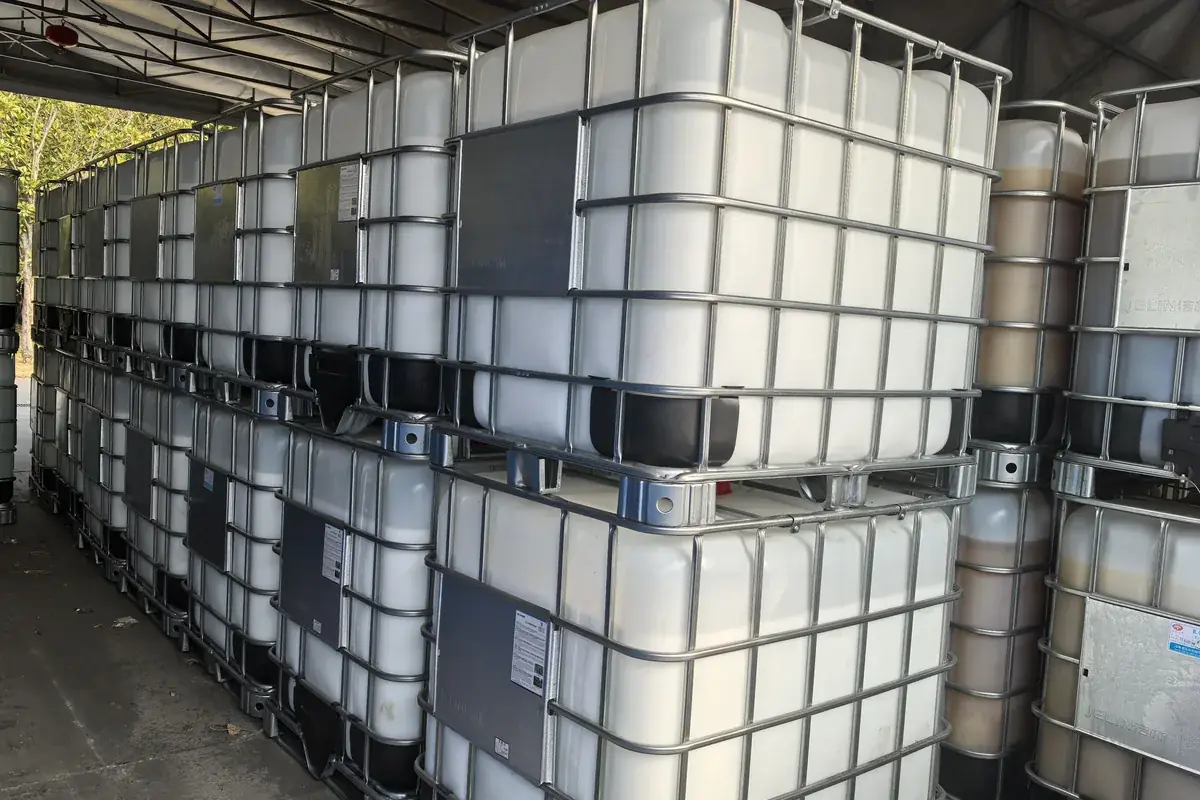
The number in a grade name such as PEG-400 or PEG-4000 is not a brand index. It is the approximate average molecular weight of the polymer chain, and it predicts almost everything else about the product: what it looks like at room temperature, how many hydroxyl groups sit in a given mass, how viscous it is, and which job it can do. This note explains what polyethylene glycol molecular weight actually refers to, how it shows up in the analytics you receive with a certificate, and how to specify a grade so that two suppliers quote the same thing.
Polyethylene glycol is made by polymerising ethylene oxide onto a starting glycol, so the chain is a string of ethylene oxide units capped at both ends. The grade number is the average molar mass of that chain: a 400 grade averages roughly 400 g/mol, a 4000 grade roughly 4000 g/mol. Because it is an average and not a single species, real grades are sold as ranges rather than exact figures. Our PEG-4000 is specified as molecular weight 3600-4400, for example, which is why a 4000 and a 4200 grade are the same family rather than different products. Read the range, not the round number.
Above a few hundred grams per mole the chain length starts to dominate the physical behaviour. Short chains behave like solvents; medium chains are pastes; long chains are waxy solids. The grade table on our polyethylene glycol page runs PEG-200 and PEG-400 as liquids, PEG-1000 as a paste and PEG-2000 upwards as waxes, which is simply the same chemistry at increasing chain length. That single trend - liquid to paste to solid - is the fastest way to sanity-check a grade you have not used before.
Every PEG chain ends in hydroxyl groups, and the hydroxyl value measures how many of them there are per unit mass. Longer chains mean fewer chain ends per gram, so hydroxyl value falls as molecular weight rises - a monotonic relationship that makes the certificate self-checking. Two published examples from our range make the point: PEG-4000 (molecular weight 3600-4400) carries a hydroxyl value of 26-32 mgKOH/g, while PPG-400 (molecular weight 360-440) carries 255-312 mgKOH/g. The tenfold difference in chain length shows up as a tenfold difference in hydroxyl value. If a supplier quotes a long chain with an implausibly high hydroxyl value, or a short chain with an implausibly low one, the quoted molecular weight deserves a second look.
| Grade | Molecular weight | Form at 25 °C | Hydroxyl value | Where it fits |
|---|---|---|---|---|
| PEG-4000 | 3600-4400 | White flake | 26-32 mgKOH/g | Binder, carrier and solubiliser in pharmaceutical, cosmetic and industrial systems; pH(1%) 5.0-7.0, colour Pt-Co ≤50 |
| APEG-1000 | about 1000 | White to light-yellow solid | 51-62 mgKOH/g | Allyl-terminated polyether monomer; core raw material for polycarboxylate superplasticizer chains; unsaturation ≥0.75 mmol/g |
| PPG-400 | 360-440 | Colourless viscous liquid | 255-312 mgKOH/g | Polyether diol for flexible PU foam, elastomers and polyether synthesis; acid value ≤0.5 mgKOH/g |
| BPE-1600 | not published for this grade | Colourless liquid | not published | Random polyether for defoaming, levelling and wetting in coatings and industrial cleaning; content ≥99.0%, acid value ≤0.5 mgKOH/g |
Note the last row carefully. Random Polyether BPE-1600 is published with colour, acid value, content and pH, but its molecular weight is a series-level reference rather than a grade-specific figure, so it is stated as not published for this grade. That is the honest answer, and it is also the practical lesson: molecular weight is the one number worth confirming in writing before you build a formulation around a grade.
Molecular weight is only one axis of a polyether. The other is what the chain is made of. PEG is ethylene-oxide based and water-soluble; PPG is propylene-oxide based and markedly more hydrophobic, which is why PPG-400 (CAS 25322-69-4) appears where water resistance or lower surface activity is wanted rather than solubility. Random polyethers distribute the two units along one chain instead of in blocks, so a single molecule can be tuned for wetting, levelling or low foam by changing the ratio. Two grades of the same molecular weight but different backbones will not substitute for each other, and two grades with the same backbone but different chain lengths usually will - within a working window. Specify both axes, or the comparison is not a comparison.
For the definitional background, start with what polyethylene glycol is and how the grades differ. For how the same polyether family behaves in foam control and polyurethane systems, see polyether polyols and block polyethers. Representative grades to compare are PEG-4000 for the high-molecular-weight, hydroxyl-poor end, PPG-400 for the propylene-oxide backbone at the same physical form, APEG-1000 for an allyl-terminated thousand-molecular-weight chain, and Random Polyether BPE-1600 for a mixed EO/PO random structure.
The sections above explain why the number matters. What a buyer needs next is the form that number actually takes on a purchase order and on a certificate. For any PEG grade it is three things at once: the nominal number carried in the grade name, the published window the grade is sold against, and the measured value on the lot certificate. Keeping them apart is most of the work.
| Where it appears | What it says | What you do with it |
|---|---|---|
| Grade name (PEG-4000) | The nominal chain length the grade is associated with | Identifies the family and the property range to expect; not an acceptance figure on its own. |
| Published specification | The window the grade is made to - for example a molecular weight of 3600-4400 for the PEG-4000 in this range | This is the acceptance band you quote and check against. |
| Supporting test on the specification | A figure that moves with chain length, such as a hydroxyl value of 26-32 mgKOH/g for the same grade | The independent check that the chain length is what the window says. |
| Lot certificate of analysis | The measured values for the lot that actually arrived | What governs acceptance of that delivery. |
Read the table in order and most of the confusion around 'molecular weight of PEG' resolves. The grade number is a label; the window is the specification; the supporting test is the cross-check; and the certificate is the evidence. A buyer who quotes only the round grade number has quoted the label.
Molecular weight on a PEG grade is an average, so it describes the centre of a distribution rather than a single molecule. Two commercial chains with the same published average can sit differently around it, and the difference is not academic: it can show up in melting behaviour, in viscosity at a given temperature and in how the grade behaves on dilution. That is why the same nominal grade from two sources can be inside the same published window and still not be interchangeable in a running formulation.
The practical consequence is not that molecular weight is unreliable. It is that the number is the beginning of a specification rather than the whole of one.
Because molecular weight is a continuum rather than a set of categories, choosing a grade means picking the point on that line where the property you care about most is strongest. The table below reads the same published examples from this range in the other direction - from the need back to the chain length.
| What you need most | Which way the number moves | Why, from the published values |
|---|---|---|
| A liquid you can pour and use as a carrier | Down, to a few hundred | Short chains behave like solvents; the same backbone becomes a solid as the chain lengthens. |
| A paste or a semi-solid | Towards the middle | The change from liquid to paste to solid is driven by chain length, not by a change of chemistry. |
| A solid that binds or releases | Up, into the low thousands | PEG-4000 is published as a white flake at 25 °C with a hydroxyl value of 26-32 mgKOH/g, and is used as a binder, carrier and solubiliser. |
| Fewer chain ends per gram | Up | Hydroxyl value falls as the chain lengthens: 255-312 mgKOH/g at PPG-400 against 26-32 mgKOH/g at PEG-4000. |
| A defined end group rather than a plain chain | Not set by molecular weight | APEG-1000 is published at about 1000 with an unsaturation of at least 0.75 mmol/g, because the allyl end group is the point of the grade, not the chain length. |
The last row is the one that catches buyers out most often. Where a grade exists for its end group or its backbone rather than for its chain length, the molecular weight describes the product rather than explaining why you buy it - so it belongs in the specification as a check, not as the selection criterion.
An enquiry that names only a grade number will attract quotations that look identical and are not. The list below is the minimum that makes two suppliers comparable, and every item is something the specification already contains.
Two grades from this range make the point about backbone chemistry concrete. Emulsifier EL-40 (PEG-40 castor oil) is an ethoxylated oil built on a PEG chain, while 400MOP, a PEG400 mono-oleate phosphate ester puts a short PEG backbone into a phosphate-ester emulsifier with a different duty altogether. Same chain family, different product - which is the reason an enquiry has to name the chemistry as well as the number.
The class-and-job distinction behind most PEG questions is set out in surfactant vs emulsifier, and the ionic side of the same argument in nonionic vs anionic surfactants. For the definitional background, what an emulsifier is covers the surface activity that a PEG only acquires once its chain is long enough to matter.
Molecular weight is the axis most PEG grades are bought on, but it is rarely the only one. The grades where a different axis leads - an end group, a mixed backbone, a phosphate ester - are the ones where the specification conversation pays for itself.
Tell us the molecular weight window, the backbone chemistry and the service conditions, and we will shortlist grades, confirm the specification values against the certificate and prepare samples. Send us your application.
Polyether Polyol
polyethylene glycol 4000
Polyether Polyol
polypropylene glycol 400
Polyether Polyol
APEG-1000 allyl polyethylene glycol
Polyether Polyol
random polyether BPE-1600
It is the approximate average molecular weight of the polymer chain - the number of ethylene oxide units expressed as molar mass. A 400 grade averages about 400 g/mol. Because it is an average, grades are sold as ranges: our PEG-4000 is specified as molecular weight 3600-4400.
Hydroxyl value counts chain ends per unit mass. A longer chain carries fewer hydroxyl ends per gram, so the value falls. Our PEG-4000 (molecular weight 3600-4400) is specified at 26-32 mgKOH/g, while PPG-400 (molecular weight 360-440) is specified at 255-312 mgKOH/g.
No. Chain length and backbone chemistry are two separate axes. PEG is ethylene-oxide based and water-soluble; PPG is propylene-oxide based and more hydrophobic. Two grades of equal molecular weight with different backbones will not substitute for each other.
As a range plus a supporting test. Our PEG-4000 is quoted at molecular weight 3600-4400 together with hydroxyl value 26-32 mgKOH/g, pH 5.0-7.0 at 1% and colour Pt-Co ≤50, made to standard Q/320621HA024. The range, not the round grade number, is the specification.
As a window plus a supporting test, not as the round grade number. Our PEG-4000 is quoted at a molecular weight of 3600-4400 together with a hydroxyl value of 26-32 mgKOH/g, a pH of 5.0-7.0 at 1% and a colour of Pt-Co 50 or below, made to standard Q/320621HA024. The window is what you quote and what the certificate is checked against; the grade name only identifies the family.
Yes. Molecular weight on a PEG is an average, so it describes the centre of a distribution rather than a single species. Two commercial chains with the same published average can differ in how the chain lengths are spread around it, and that can change melting behaviour, viscosity and behaviour on dilution. Qualify a second source against its own certificate of analysis rather than against the grade name.
No. It is the axis most grades are bought on, but it does not carry the backbone chemistry or the end group. APEG-1000 is published at about 1000 with an unsaturation of at least 0.75 mmol/g because the allyl end group is the point of the grade, and PPG-400 sits at 360-440 on a propylene-oxide backbone rather than an ethylene-oxide one. Specify the window and the chemistry together, or the comparison is not a comparison.
Share your application, target market and required volume — our team responds with selection and lead time.
Contact us